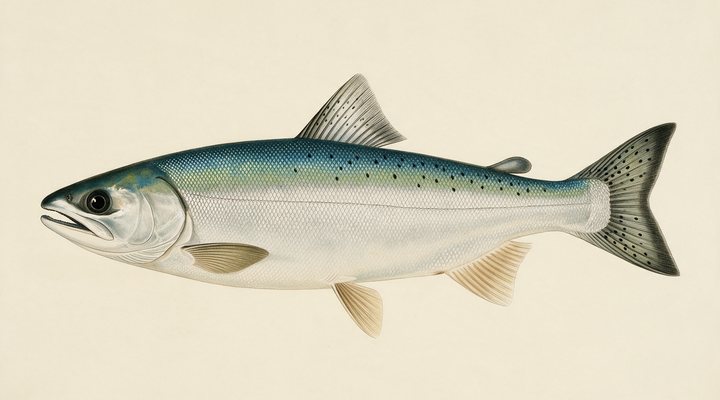
Coho salmon
Excellent
The river run. Float gear with roe or a jig, or cast spinners and spoons in the slower tailouts after a rise in water.
Updated Fri, Sep 25, 2026 from live weather and water data
Salt water off Canada’s biggest west coast city: chinook and coho in the summer, crabs off the docks, and the Fraser and Capilano on the doorstep.
Sources: modelled tide curve, Open-Meteo, solunar calculated for these coordinates.
Vancouver is in its cool-water rhythm: slower presentations and the warmest hours of the day. Today brings cloud cover, wind WNW around 6 km/h, rising pressure near 1005 hPa and a high of 13 °C. Tides: high 11:55 a.m., low 5:49 a.m. and 6:11 p.m.: the moving water either side of each change is when this place feeds. Water sits around 13 °C for the season (estimated). With the full moon, the solunar majors run 10:25 AM-12:25 PM and 10:25 PM-12:25 AM: the windows to build the day around.
The river run. Float gear with roe or a jig, or cast spinners and spoons in the slower tailouts after a rise in water.
Fish are staging or moving to the rivers. On the coast, the deeper banks and the winter feeders; in Great Lakes rivers, drifted roe and spinners in the deeper runs.
Tie on: Float and roe · Swung fly through the tailout · Jerkbait, long pauses · Hair jig on the rock. Prime windows: 10:25 AM-12:25 PM, 10:25 PM-12:25 AM, 4:55 AM-5:55 AM. Similar at 14 °C. The solunar majors shift about 50 minutes later.
British Columbia requires a fishing licence for most fishing, from C$11.43. British Columbia fishing licence: cost, rules and where to buy →
Chasing chinook (spring) salmon here? Check the size and bag limits with BC Freshwater Fishing before you keep anything; the Chinook (spring) salmon page has the seasons and the tactics.
Hour-by-hour bite forecast for today from sunrise (07:03), sunset (19:03), the moon and today's score, with the modelled tide changes in the panel below. Tap a bar to see why.
Solunar majors 10:25 AM-12:25 PM and 10:25 PM-12:25 AM; minor 4:55 AM-5:55 AM. Full Moon, 99% lit.
A modelled tide curve for these coordinates and the forecast for the day.
Modelled sea level curve from Open-Meteo Marine for these coordinates, datum mean sea level. Fish the moving water either side of each change.
A model, not the official prediction: times can drift by tens of minutes inside bays and estuaries. Check the Canadian Hydrographic Service predictions at tides.gc.ca for the exact times before you rely on them.
Latest readings
The best day on Vancouver this week looks like Sunday Sep 27, at 4 out of 5, against 3 today. Every day is scored by the same engine as the report above: pressure trend first, then wind, sky and season. Pick a species and the plan for that day changes with it.
Best day this week: Sunday, Sep 27 — good at 4/5, falling pressure, usually the best window of a week.
A steady pattern: dawn and dusk carry the day.
Scores are a planning aid built from forecast data, not a promise.
The species that matter on Vancouver: seasons written for the Canadian year, and how to fish each one. Today's ratings live in the report above.
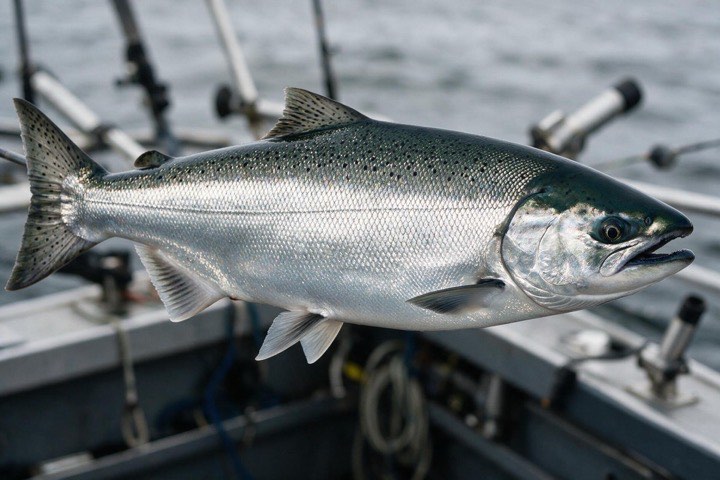
The biggest Pacific salmon, called spring or king on the BC coast. Feeds along the kelp lines, points and tide rips of the BC coast before running rivers in late summer; introduced to the Great Lakes, where it runs the tributaries in fall. Retention on the BC coast changes by area and by DFO fishery notice. Fish are staging or moving to the rivers. On the coast, the deeper banks and the winter feeders; in Great Lakes rivers, drifted roe and spinners in the deeper runs.
Silver, aggressive and surface-oriented. Feeds hard along the BC coast through summer and runs the Fraser Valley and Island rivers in fall, the Vedder and the Stamp among them. Hatchery coho are marked by a clipped adipose fin; what may be kept depends on the water and the DFO notice. The river run. Float gear with roe or a jig, or cast spinners and spoons in the slower tailouts after a rise in water.
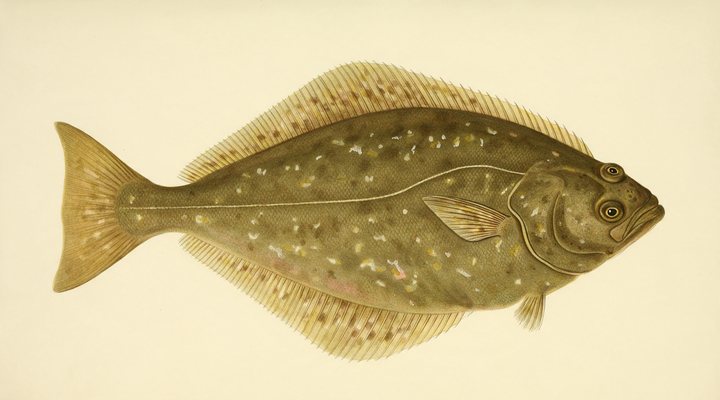
The big flatfish of the outer coast: Bamfield, Ucluelet, Tofino, Nootka and the north coast. Annual and daily limits and size rules are set by DFO and change during the season. Fewer fish; the offshore banks on the calm days.
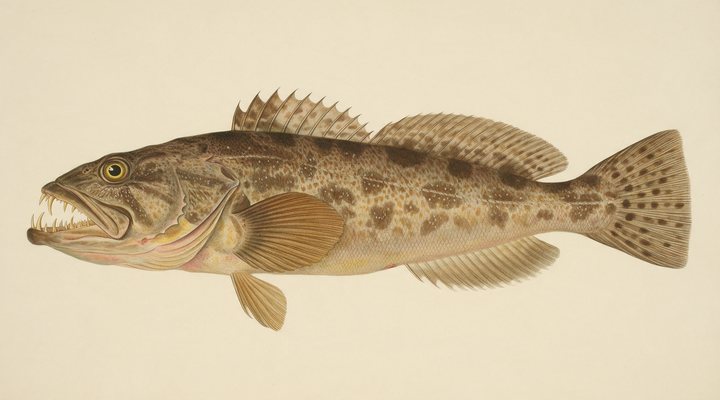
The toothy reef fish of the BC coast, on rock piles and pinnacles. Limits and closures vary by DFO management area. Fish move shallower; jig the rocky points.
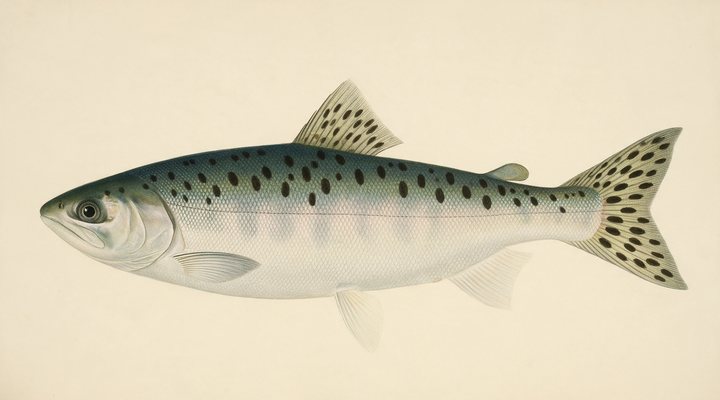
The smallest and most numerous Pacific salmon. In the south of BC the big runs come in odd-numbered years; the fish crowd the estuaries and the lower rivers in August and September. The run is over.
Activity by species and month for the Canadian year, and how the water warms and cools. Tap any cell.
1 = slow, 5 = peak. Current month highlighted. January is midsummer here.
Typical surface temperature for this water type in degrees Celsius; today is around 13 °C (estimated, not a reading).
Real reports from real anglers, reviewed before publishing. Nothing here is copied from a shop or a charter. The water log below tracks each day automatically.
3/5 Fair. Fish the windows. A steady pattern: dawn and dusk carry the day. Coho salmon led the card at excellent. High of 16 °C, wind to 11 km/h.
3/5 Fair. Fish the windows. A steady pattern: dawn and dusk carry the day. Coho salmon led the card at excellent. High of 18 °C, wind to 11 km/h.
3/5 Fair. Fish the windows. A steady pattern: dawn and dusk carry the day. Coho salmon led the card at excellent. High of 21 °C, wind to 10 km/h.
BC freshwater fishing licence, from C$11.43 for a resident adult, with higher prices for other Canadians and visitors. Details and where to buy →
Size and bag limits, closed seasons and protected areas are set by BC Freshwater Fishing and, in salt water and for salmon, by Fisheries and Oceans Canada, and change: confirm the current rules on the agency page linked from the British Columbia licence page before you keep anything.
Tidal waters need a federal sport fishing licence from DFO, with a salmon conservation stamp to keep salmon; the freshwater rivers need a British Columbia freshwater licence.
Vancouver is a coastal town in British Columbia, Canada, covered from the British Columbia reports and listed in all Canada waters.
Vancouver sits between the mouth of the Fraser River and Howe Sound, on the Strait of Georgia, and the salt water off its shores is fished from boats out of False Creek, Granville Island, West Vancouver and Richmond. The city’s fishing is mostly salmon in season, bottom fish and crab, with the rivers of the North Shore and the Fraser within an hour. The report on this page is scored for the city’s coordinates, with a modelled tide curve for the harbour.
Chinook, called spring salmon here, feed off the city from late spring into summer, and coho arrive in numbers in late summer; both are managed by Fisheries and Oceans Canada (DFO) area by area, and what may be kept changes by fishery notice. Dungeness and red rock crab are taken by trap from boats and docks, and lingcod and rockfish live on the rocky reefs of Howe Sound, where rockfish conservation areas close some reefs to bottom fishing.
Boat anglers work the mouth of the Fraser, the edges of the Fraser plume, the waters off West Vancouver and the channels of Howe Sound. From shore, the rocky points and the public piers give access for crab and the odd salmon. The Capilano River and the Fraser at Mission have their own pages.
Launch ramps and marinas ring the harbour, and guides run half-day salmon trips from the city. Bring a rain jacket for any month outside summer; the fishing season and the tourist season overlap in July and August, when the water off the city is busy.
Summer brings the chinook and then the coho past the city on their way to the Fraser; fall shifts attention to the rivers; winter is quieter, with crab and the occasional winter chinook. The Fraser’s spring freshet colours the water off the river mouth from late May into July.
The tide panel is a modelled curve for these coordinates, labelled as a model; the official times are from the Canadian Hydrographic Service. Wind decides whether the open water off the city is fishable; pressure and sky build the score.
Tidal waters need a federal sport fishing licence from DFO, with a salmon conservation stamp to keep salmon; the freshwater rivers need a British Columbia freshwater licence. Area limits, closures and rockfish conservation areas are on the DFO pages linked below.
Yes: a tidal waters sport fishing licence from DFO, and a salmon conservation stamp if you keep salmon. Freshwater needs a separate BC licence.
Chinook from late spring into summer and coho in late summer; what may be kept is set by DFO notices for each area.
Yes, by trap or ring under the DFO crab rules, which set the species, size and sex that may be kept.
Check the daily report at the top of this page: it is regenerated every morning from live data. Today's read: Fair. Fish the windows. A steady pattern: dawn and dusk carry the day.
 Pablo Ruiz Quintero
Readings refresh on a 30-minute window. The full method, with every figure and its source, is on How our reports are made. Something wrong here? Tell us and it goes in the log with the date.