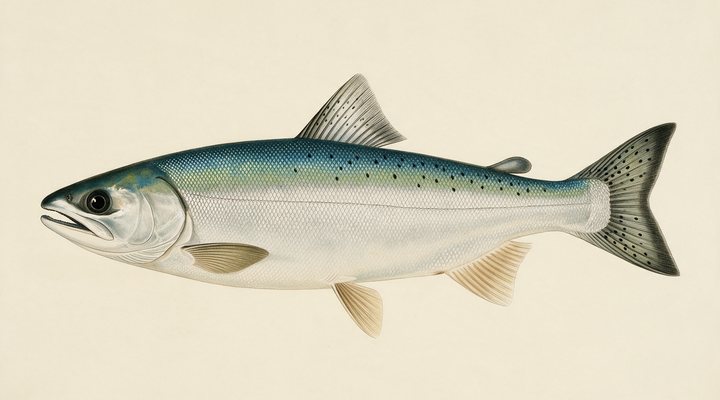
Identification and biology
The coho is the silver salmon of the Pacific coast: bright silver at sea with a metallic blue-green back, small black spots on the back and on the upper lobe of the tail only, and white gums at the base of the teeth. It spends about a year and a half at sea and returns to spawn in the fall in small and large rivers alike, turning red-sided and hook-jawed on the way. Coho are aggressive and feed near the surface, which makes them a favourite on light gear. Many BC rivers, the Vedder and the Capilano among them, have hatchery coho marked by a clipped adipose fin, and the rules often allow hatchery fish to be kept while wild coho are released. Coho were also introduced to the Great Lakes.
Where they live through the year
On the BC coast, coho feed along the tide lines and bait schools from midsummer, close to the surface, and are the late-summer fish of Sooke, Ucluelet, Tofino and the Strait of Georgia. In the fall they move into the estuaries and wait for rain, then run up the rivers from October into November: the Vedder, the Capilano, the Stamp and the Squamish are well-known coho rivers. They spawn in small tributaries through the late fall and winter.
The mistakes that cost fish
Trolling too slow and too deep: coho respond to fast-moving, bright lures near the surface. Fishing the river on the day of a big rise, when the water is high and dirty, instead of the day or two after, when it drops and clears. Keeping a wild coho where only hatchery fish may be kept: check the adipose fin and the synopsis for the water.
Reading the report for coho
On the river pages, the gauge is the first thing to read: coho move on a rise and bite best as the river drops. On the coastal pages, the wind and the tide decide the day. Grey, drizzly fall days are classic coho weather in the rivers.
Where to fish them in Canada
On this site, coho are on the pages for Sooke, Victoria, Ucluelet, Tofino and the other Vancouver Island coast towns in summer, and on the Vedder, Capilano, Squamish, Harrison and Stave river pages in the fall, each with the live gauge where there is one.
Tackle setups
| Situation | Setup | Why it works |
|---|---|---|
| Surface trolling at sea | 2.7 m rod, 7 kg line, bucktail fly or small hoochie trolled fast in the top five metres | Coho chase fast, bright lures near the surface |
| River spinner | 2.7 m spinning rod, 5 to 6 kg line, size 3 to 5 spinner or small spoon | Casting to fish holding in the slower tailouts |
| Float fishing | 3.3 m float rod, 5 kg line, jig or roe under a float | Drifting a bait at the right depth through the runs |
| Fly | 2.7 m rod for a 7 or 8 weight line, sink-tip, bright streamer | Stripped through the slow water where coho hold |
Playbook by water temperature
The plan the daily report picks for coho salmon in each band; the water temperature on each page is a seasonal estimate for its type of water and says so.
Hot water (over 27 °C)
Coho sit higher than chinook. Troll bucktail flies and small hoochies fast near the surface at dawn, or cast spoons to feeding fish.
Warm water (18 to 27 °C)
The best of the coastal run: surface to twenty metres along rips and bait schools, fast troll, bright colours.
Cool water (10 to 18 °C)
The river run. Float gear with roe or a jig, or cast spinners and spoons in the slower tailouts after a rise in water.
Cold water (under 10 °C)
Late fish in the rivers are dark and done; the coast is quiet until spring.
Month by month
Activity for the Canadian year, 1 slow to 5 peak; January is midwinter, with most lakes under ice. Current month highlighted.
Waters we cover for coho salmon
27 Canada waters carry coho salmon on their species card, each with a daily report.
British Columbia
Common questions
When do coho run in BC rivers?
From October into November in most Fraser Valley and Vancouver Island rivers, after the fall rains raise the water.
Can I keep a coho?
It depends on the water and the season: many rivers allow hatchery coho with a clipped adipose fin to be kept and require wild coho to be released; the synopsis and DFO notices set the rules.
What is the best lure for coho?
Bright spinners and spoons in the rivers, and bucktail flies or small hoochies trolled fast near the surface at sea.