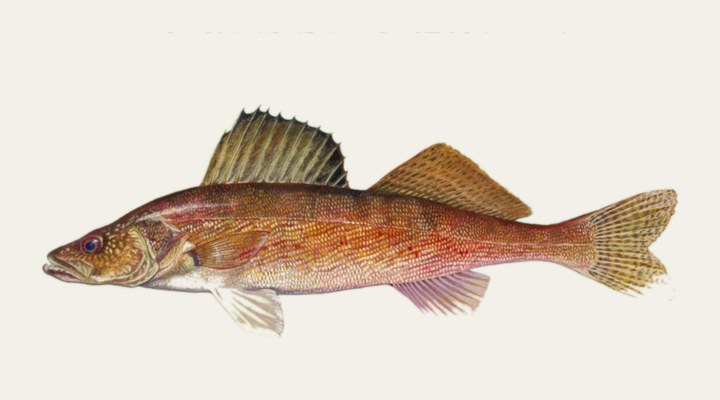
Walleye (pickerel)
Good
Through the ice where it is safe: jigging spoons and a dead-stick minnow near the bottom at first and last light. Open rivers: slow jigs in the deep holes.
Updated Mon, Nov 9, 2026 from live weather and water data
Lake Muskoka, held by the ministry’s dams at Bala: a live level from the Beaumaris gauge, with the conversion to metres above sea level, and stocked lake trout, bass, walleye and pike under Zone 15 rules.
Sources: Water Survey of Canada station 02EB018, Open-Meteo, solunar calculated for these coordinates.
Lake Muskoka is in its winter rhythm: slow, deep and around the brightest hours. The gauge reads 9.39 m, up 0.06 over the week. Today brings cloud cover, wind NW around 21 km/h, rising pressure near 1012 hPa and a high of 7 °C. Water sits around 4 °C for the season (estimated). With the new moon, the solunar majors run 11:43 PM-1:43 AM and 11:19 AM-1:19 PM: the windows to build the day around.
Through the ice where it is safe: jigging spoons and a dead-stick minnow near the bottom at first and last light. Open rivers: slow jigs in the deep holes.
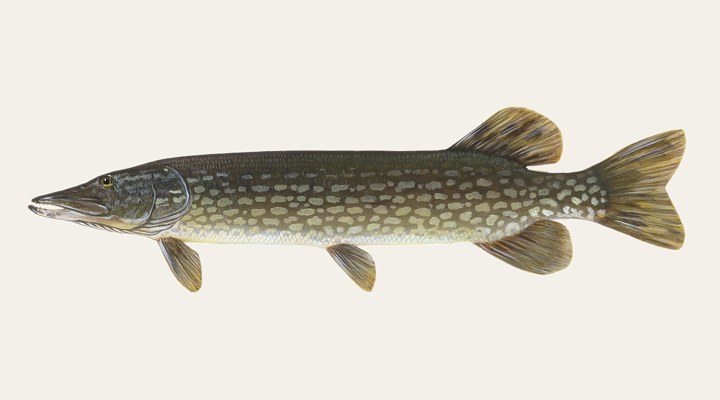
Under the ice where it is safe: tip-ups with dead bait in the shallow bays.
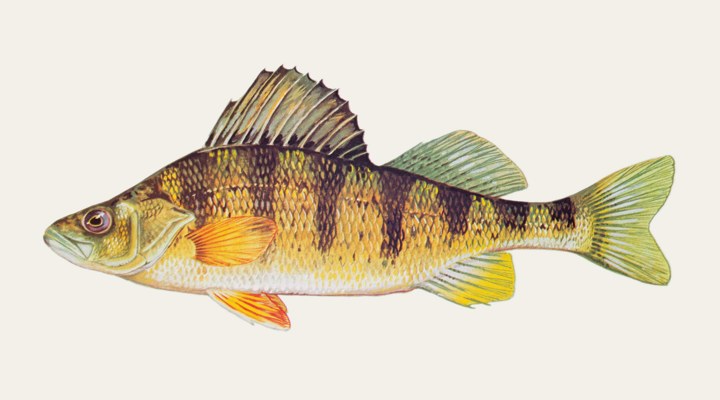
The ice season where the ice is safe: small spoons and tungsten jigs tipped with minnow heads, moving hole to hole to find the school.
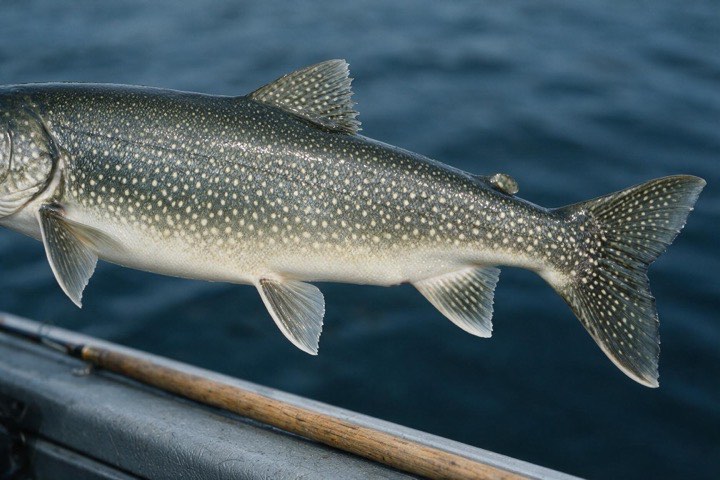
Reopens Jan 1, 2027. Lake trout are open 1 January to 30 September in Zone 15; the summary lists no exception for Lake Muskoka.
Tie on: Jigging spoon through the ice · Dead-stick minnow · Tip-up with dead bait · Tungsten jig and wax worm. Prime windows: 11:43 PM-1:43 AM, 11:19 AM-1:19 PM, 7:24 AM-8:24 AM. Similar at 9 °C. The solunar majors shift about 50 minutes later.
Ontario requires a fishing licence for most fishing, from C$12.21. Ontario fishing licence: cost, rules and where to buy →
Chasing lake trout here? Check the size and bag limits with Ontario MNR before you keep anything; the Lake trout page has the seasons and the tactics.
Hour-by-hour bite forecast for today from sunrise (07:07), sunset (16:55), the moon and today's score. Tap a bar to see why.
Solunar majors 11:43 PM-1:43 AM and 11:19 AM-1:19 PM; minor 7:24 AM-8:24 AM. New Moon, 0% lit.
Live readings from Water Survey of Canada station 02EB018 (LAKE MUSKOKA AT BEAUMARIS).
Water Survey of Canada real-time hydrometric data, station 02EB018. Latest reading 2026-11-09 07:45.
Latest readings
The best day on Lake Muskoka this week looks like Thursday Nov 12, at 4 out of 5, against 3 today.
Best day this week: Thursday, Nov 12 — good at 4/5, falling pressure, usually the best window of a week.
A steady pattern: dawn and dusk carry the day.
Forecast-based scores, less reliable further out.
The species that matter on Lake Muskoka: seasons written for the Canadian year, and how to fish each one. Today's ratings live in the report above.
Closed now Reopens Jan 1, 2027. Lake trout are open 1 January to 30 September in Zone 15; the summary lists no exception for Lake Muskoka. Rule as read from Ontario Ministry of Natural Resources on 2026-09-27.
The big char of cold, deep lakes: Lake Simcoe, the Kootenay and Shuswap systems, the northern lakes. A winter favourite through the ice, where the season allows.
Open now Closes Dec 1, 2026. Largemouth and smallmouth bass combined are open from the fourth Saturday in June to 30 November. Rule as read from Ontario Ministry of Natural Resources on 2026-09-27.
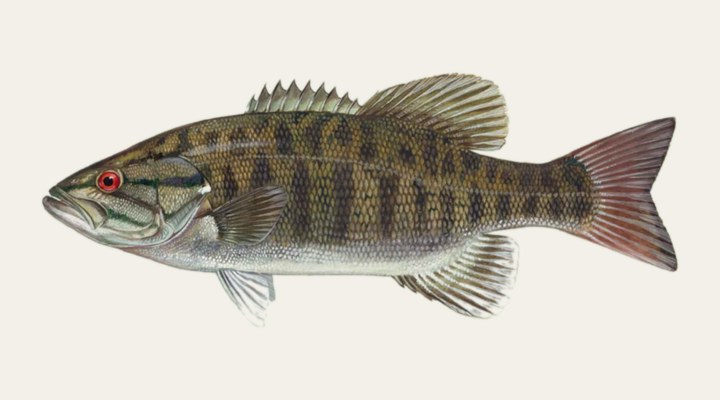
The rock-and-current bass of the Great Lakes shores, the Bay of Quinte, the St. Lawrence and Lake St. Clair. The Ontario bass season opens in late June in most zones, after the nesting period. Closed or out of season in most waters.
Open now Closes Mar 16, 2027. Walleye and sauger combined are open 1 January to 15 March and from the third Saturday in May to 31 December; four on a sport licence and two on a conservation licence, not more than one over 46 cm. Rule as read from Ontario Ministry of Natural Resources on 2026-09-27.
Called pickerel in much of Ontario and Manitoba. The fish of Lake of the Woods, Lake Winnipeg and the Red River, Lake Diefenbaker, Tobin Lake, Lake Erie and the Bay of Quinte. Most zones close in spring for the spawn. Through the ice where it is safe: jigging spoons and a dead-stick minnow near the bottom at first and last light. Open rivers: slow jigs in the deep holes.
Open now Closes Apr 1, 2027. Northern pike are open 1 January to 31 March and from the third Saturday in May to 31 December. Rule as read from Ontario Ministry of Natural Resources on 2026-09-27.
Called jackfish on the prairies. Found in almost every lake and slow river from Ontario to Alberta; big fish in the cold, deep lakes. Under the ice where it is safe: tip-ups with dead bait in the shallow bays.
Open all year Yellow perch are open all year in Zone 15. Rule as read from Ontario Ministry of Natural Resources on 2026-09-27.
The ice-fishing fish of Lake Simcoe, Long Point Bay and Lake St. Clair, and a summer staple on every Great Lakes shore. Schools move constantly. The ice season where the ice is safe: small spoons and tungsten jigs tipped with minnow heads, moving hole to hole to find the school.
Activity by species and month for the Canadian year, and how the water warms and cools. Tap any cell.
1 = slow, 5 = peak. Current month highlighted. January is midsummer here.
Typical surface temperature for this water type in degrees Celsius; today is around 4 °C (estimated, not a reading).
Real reports from real anglers, reviewed before publishing. Nothing here is copied from a shop or a charter. The water log below tracks each day automatically.
3/5 Fair. Fish the windows. A steady pattern: dawn and dusk carry the day. Walleye (pickerel) led the card at good. High of 9 °C, wind to 23 km/h.
3/5 Fair. Fish the windows. A steady pattern: dawn and dusk carry the day. Walleye (pickerel) led the card at good. High of 8 °C, wind to 14 km/h.
3/5 Fair. Fish the windows. A steady pattern: dawn and dusk carry the day. Walleye (pickerel) led the card at good. High of 11 °C, wind to 14 km/h.
Outdoors Card and Ontario fishing licence, from C$12.21 for a resident adult, with higher prices for other Canadians and visitors. Details and where to buy → Except on a one-day licence you also need the Outdoors Card.
Size and bag limits, closed seasons and protected areas are set by Ontario MNR and, in salt water and for salmon, by Fisheries and Oceans Canada, and change: confirm the current rules on the agency page linked from the Ontario licence page before you keep anything. The zone-by-zone seasons and limits are on Ontario fishing seasons.
undefined.
Lake Muskoka is a lake in Ontario, Canada, covered from the Ontario reports and listed in all Canada waters.
Lake Muskoka lies in the Township of Muskoka Lakes, fed by the Muskoka River from Bracebridge and reached from Gravenhurst’s waterfront at Muskoka Wharf. The Ontario Ministry of Natural Resources describes it as the largest inland lake in the District of Muskoka, at 12,100 hectares, with a maximum depth of 73 m and a mean depth of 18 m; its fact sheet lists a 269 km perimeter and 209 km of island shoreline. The ministry rates its shoreline development as intense and records no Crown land on the lake. The live level on this page comes from the gauge at Beaumaris.
The gauge is station 02EB018, LAKE MUSKOKA AT BEAUMARIS, one of the real-time stations the ministry maintains with Environment Canada under a cost-sharing program. It measures level only, on an assumed datum, so its figure of around 9 to 10 m is not a height above sea level. The ministry’s page on the Muskoka Water Web gives the conversion: add 215.950 to the gauge reading to get the lake’s elevation in metres above sea level, the figure used on the lake’s annual operating plan. A reading of 9.34 m, for instance, means 225.29 m. The daily record at Beaumaris starts in November 2002. Its highest annual peak, 10.205 m, or 226.155 m above sea level, came on 27 April 2013, and the three lowest annual minima fell between 24 March and 2 April.
The ministry’s dams at Bala control the level, under the Muskoka River Water Management Plan, which dates from 2006 and was last updated in December 2024. Water control technicians place or pull stop logs to keep each lake inside a seasonal normal operating range. On Lake Muskoka’s operating plan the lake is drawn down over the winter to its lowest band from mid-March to mid-April, allowed to rise with the spring melt and then held in a narrow band through the summer. The plan also limits winter drawdowns on lake trout lakes, after ministry work found that deep drawdowns could leave trout eggs and fry exposed. The District of Muskoka stresses that the watershed’s dams were not built for flood control and counts floods in 2008, 2013, 2016 and 2019; at Beaumaris, 2013 and 2016 gave the two highest peaks on record.
The ministry’s fact sheet, last updated in 2018, names lake trout as the lake’s primary native sport fish; the population fell sharply in the 1970s, partly through reproductive failure caused by DDT, and has not fully recovered. Ontario’s stocking record shows lake trout yearlings released in Lake Muskoka every year from 2016 to 2025, between 3,000 and 10,000 a year. Lake whitefish and cisco remain in low numbers, while the walleye, which also crashed, have largely been restored. Northern pike, smallmouth and largemouth bass, yellow perch, black crappie and rock bass complete the sport fishery. Zone 15 seasons, as written: lake trout, January 1 to September 30; largemouth and smallmouth bass combined, fourth Saturday in June to November 30; walleye and sauger combined, January 1 to March 15 and third Saturday in May to December 31; northern pike, January 1 to March 31 and third Saturday in May to December 31; yellow perch and lake whitefish, open all year. The summary has no exception for Lake Muskoka itself.
The Township of Muskoka Lakes lists public boat launches on the lake at Bala, Milford Bay, Port Carling, Torrance and Walker’s Point, and the Town of Gravenhurst currently charges no fee at its launches. Lake trout are open-water fish in summer, found over the deep basins below the warm surface layer, while smallmouth use the rocky points and shoals and pike the weedy bays. The Muskoka River is a fish sanctuary from April 1 to June 15, from Bracebridge Falls and South Falls down to its mouth, including the main channel to the green lighted buoy E.E.1 and the Gap to the red lighted buoy E.C.2.
Lake trout reopen on January 1, and pike, perch and whitefish are also open through the winter, while walleye close after March 15. In Zone 15, ice huts must be registered online and taken off the ice before April 1; a fabric tent of 7 square metres or less needs no registration. Late winter is when the operating plan holds the lake lowest, so shallow bays that hold fish in summer can be very thin water under the ice. No agency certifies the ice, so check it yourself.
Ontario and Canadian residents aged 18 to 64 need an Outdoors Card and a sport or conservation licence, and most visitors from outside Canada need both whatever their age. Zone 15 walleye limits are four on a sport licence and two on a conservation licence, with not more than one greater than 46 cm; lake trout limits are two and one. The zone is part of the Central Bait Management Zone, and live or dead baitfish and leeches may not be carried into or out of it unless they are both dead and preserved. Fees are on our Ontario fishing licence page.
The Ontario Ministry of Natural Resources, through its dams at Bala, under the Muskoka River Water Management Plan.
Yes, with lake trout. Ontario’s stocking record shows yearlings released every year from 2016 to 2025, from 3,000 to 10,000 a year.
January 1 to September 30, the Zone 15 zone-wide season, which applies to the lake with no special exception.
Check the daily report at the top of this page: it is regenerated every morning from live data. Today's read: Fair. Fish the windows. A steady pattern: dawn and dusk carry the day.
 Pablo Ruiz Quintero
Readings refresh on a 30-minute window. The full method, with every figure and its source, is on How our reports are made. Something wrong here? Tell us and it goes in the log with the date.