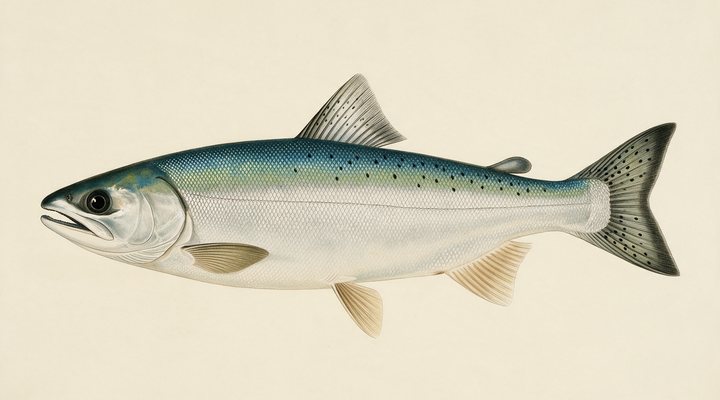
Coho salmon
Excellent
The best of the coastal run: surface to twenty metres along rips and bait schools, fast troll, bright colours.
Updated Fri, Sep 25, 2026 from live weather and water data
Lake Ontario’s Canadian shore: chinook, coho, rainbow and lake trout trolled out of the ports from Niagara to Kingston.
Sources: Open-Meteo, solunar calculated for these coordinates.
Lake Ontario has the water in the comfortable band where most of its fish feed through the day. Today brings a mixed sky, wind NNE around 19 km/h, rising pressure near 1028 hPa and a high of 17 °C. Water sits around 19 °C for the season (estimated). With the full moon, the solunar majors run 10:25 AM-12:25 PM and 10:25 PM-12:25 AM: the windows to build the day around.
The best of the coastal run: surface to twenty metres along rips and bait schools, fast troll, bright colours.
Peak season on the coast. Work the tide changes along the points and the kelp beds with a flasher and bait, adjusting depth until you mark fish.
Tie on: Jig and minnow · Spinnerbait over the weeds · Bucktail fly, fast troll · Leech pattern under an indicator. Prime windows: 10:25 AM-12:25 PM, 10:25 PM-12:25 AM, 4:55 AM-5:55 AM. Similar at 18 °C. The solunar majors shift about 50 minutes later.
Ontario requires a fishing licence for most fishing, from C$12.21. Ontario fishing licence: cost, rules and where to buy →
Chasing chinook (spring) salmon here? Check the size and bag limits with Ontario MNR before you keep anything; the Chinook (spring) salmon page has the seasons and the tactics.
Hour-by-hour bite forecast for today from sunrise (07:03), sunset (19:04), the moon and today's score. Tap a bar to see why.
Solunar majors 10:25 AM-12:25 PM and 10:25 PM-12:25 AM; minor 4:55 AM-5:55 AM. Full Moon, 99% lit.
Conditions here are modelled from weather, season and the nearest stations.
Water readings appear when a Water Survey of Canada station covers it. Until then the seasonal curve below is the estimate.
Latest readings
The best day on Lake Ontario this week looks like Wednesday Sep 30, at 5 out of 5, against 3 today. Every day is scored by the same engine as the report above: pressure trend first, then wind, sky and season. Pick a species and the plan for that day changes with it.
Best day this week: Wednesday, Sep 30 — excellent at 5/5, falling pressure, usually the best window of a week.
A steady pattern: dawn and dusk carry the day.
Scores are a planning aid built from forecast data, not a promise.
The species that matter on Lake Ontario: seasons written for the Canadian year, and how to fish each one. Today's ratings live in the report above.
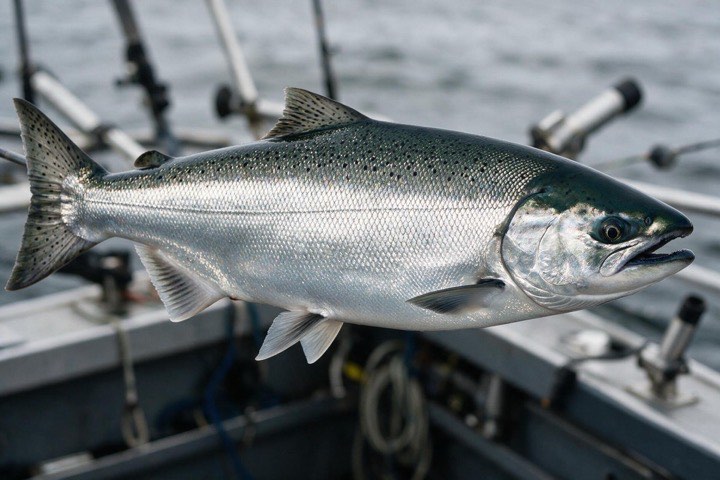
The biggest Pacific salmon, called spring or king on the BC coast. Feeds along the kelp lines, points and tide rips of the BC coast before running rivers in late summer; introduced to the Great Lakes, where it runs the tributaries in fall. Retention on the BC coast changes by area and by DFO fishery notice. Peak season on the coast. Work the tide changes along the points and the kelp beds with a flasher and bait, adjusting depth until you mark fish.
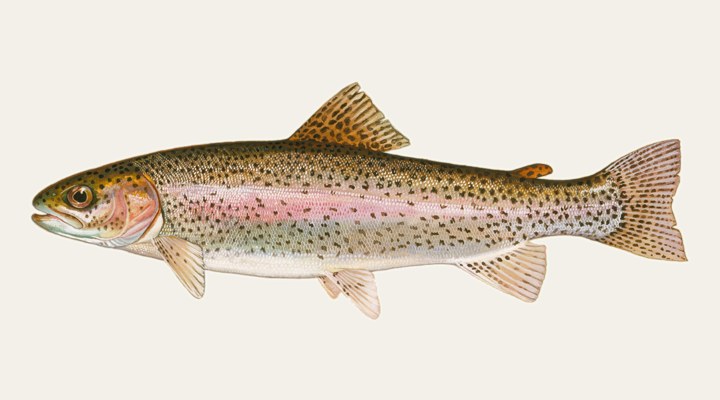
Sea-run rainbow trout, the fish of the Vedder, the Skeena system and the Island rivers in winter, and of the Great Lakes tributaries in fall and spring. In BC wild steelhead are released; a steelhead conservation surcharge applies on top of the licence. Fish the riffles and the heads of runs as water drops and clears after a rise.
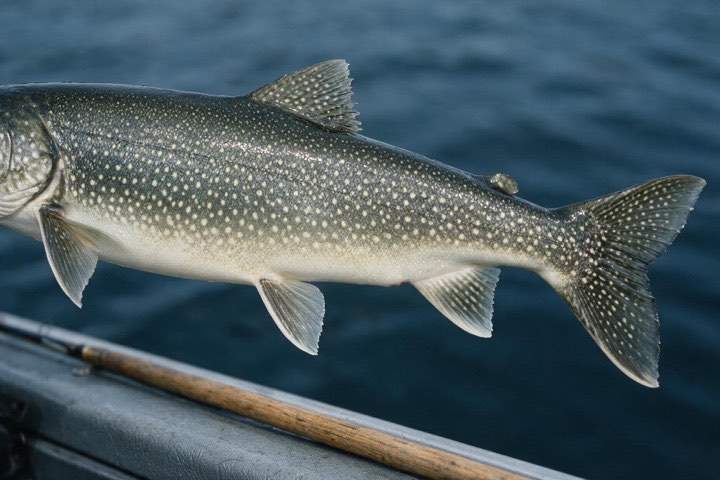
The big char of cold, deep lakes: Lake Simcoe, the Kootenay and Shuswap systems, the northern lakes. A winter favourite through the ice, where the season allows. Deep water over humps and drop-offs; vertical jigging where you mark fish.
Silver, aggressive and surface-oriented. Feeds hard along the BC coast through summer and runs the Fraser Valley and Island rivers in fall, the Vedder and the Stamp among them. Hatchery coho are marked by a clipped adipose fin; what may be kept depends on the water and the DFO notice. The best of the coastal run: surface to twenty metres along rips and bait schools, fast troll, bright colours.
Activity by species and month for the Canadian year, and how the water warms and cools. Tap any cell.
1 = slow, 5 = peak. Current month highlighted. January is midsummer here.
Typical surface temperature for this water type in degrees Celsius; today is around 19 °C (estimated, not a reading).
Real reports from real anglers, reviewed before publishing. Nothing here is copied from a shop or a charter. The water log below tracks each day automatically.
3/5 Fair. Fish the windows. A steady pattern: dawn and dusk carry the day. Coho salmon led the card at excellent. High of 17 °C, wind to 34 km/h.
3/5 Fair. Fish the windows. A steady pattern: dawn and dusk carry the day. Coho salmon led the card at excellent. High of 18 °C, wind to 35 km/h.
2/5 Slow. The wind owns today. 42 km/h gusts make boat control the real battle. Coho salmon led the card at excellent. High of 17 °C, wind to 42 km/h.
Outdoors Card and Ontario fishing licence, from C$12.21 for a resident adult, with higher prices for other Canadians and visitors. Details and where to buy →
Size and bag limits, closed seasons and protected areas are set by Ontario MNR and, in salt water and for salmon, by Fisheries and Oceans Canada, and change: confirm the current rules on the agency page linked from the Ontario licence page before you keep anything.
An Outdoors Card and an Ontario fishing licence are needed on the Canadian side; the New York side needs its own licence.
Lake Ontario is a lake in Ontario, Canada, covered from the Ontario reports and listed in all Canada waters.
Lake Ontario is the last of the Great Lakes, with Toronto, Hamilton, Oshawa and Kingston on its Canadian shore and the St. Lawrence leaving it at its eastern end. Its deep, cold water supports a big trolling fishery for salmon and trout, stocked and wild, from ports such as Port Credit, Bronte, Whitby, Port Hope and Cobourg. The coordinates on this page are in the middle of the lake off Cobourg; water levels on the Great Lakes are published by the Canadian Hydrographic Service and are not used here.
Chinook and coho salmon, rainbow trout (steelhead) and lake trout are trolled in the open lake from spring to fall, with brown trout close to shore in spring and fall; the salmon and trout run up the tributaries in the fall. Ontario’s zone seasons and limits apply.
Charter and private boats troll from the ports along the shore, following the temperature breaks offshore in summer; the piers and river mouths are fished from shore in spring and fall. The Credit and Ganaraska rivers are among the best-known tributaries for fall salmon and trout.
The ports along the shore from Niagara to Kingston have launches and charters, and the Toronto area has the most. The lake is big and rough in wind; its water stays cold well into summer.
Spring brings brown trout and coho close to shore; summer sends the salmon deep and offshore; late summer and fall bring the chinook back toward the rivers to spawn. Winter is quiet on the open lake.
The water temperature estimate, labelled as one, shows the lake’s slow warming; the fish follow the cold water, so the surface is only part of the story. Pressure, wind and sky build the score.
An Outdoors Card and an Ontario fishing licence are needed on the Canadian side; the New York side needs its own licence. The rules are linked below, and our Ontario licence page has the fees.
Chinook and coho salmon, rainbow trout, lake trout and brown trout.
Trolling from spring to fall, with chinook moving toward the rivers in late summer and fall.
No. Great Lakes levels are published by the Canadian Hydrographic Service and are not used here.
Check the daily report at the top of this page: it is regenerated every morning from live data. Today's read: Fair. Fish the windows. A steady pattern: dawn and dusk carry the day.
 Pablo Ruiz Quintero
Readings refresh on a 30-minute window. The full method, with every figure and its source, is on How our reports are made. Something wrong here? Tell us and it goes in the log with the date.