Identification and biology
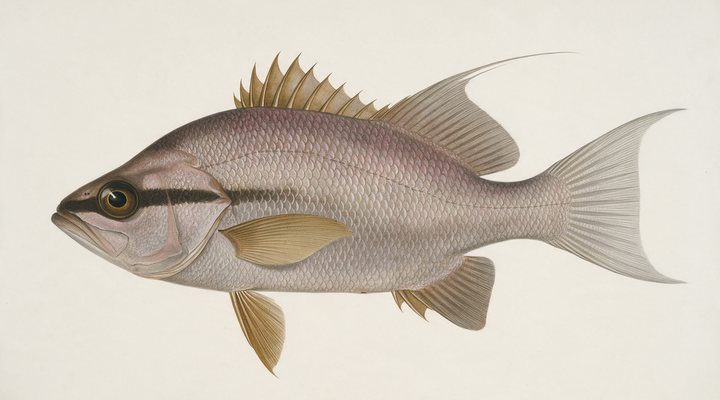
The West Australian dhufish, Glaucosoma hebraicum, is found nowhere else on earth: a deep, silver-grey fish with a dark bar through the eye, a big head and mouth, and, in old males, a bony hump on the forehead, living on limestone reef, ledges and lumps in twenty to a hundred metres from Kalbarri south to Augusta. It grows past twenty kilograms and lives for decades, matures late, and its stock has been the centre of Western Australia’s demersal management for twenty years: the West Coast bioregion’s boat-based demersal fishery, which includes dhufish, pink snapper and baldchin groper, is closed to recreational fishing until spring 2027, with no date published, and statewide reforms started in June 2026. Land-based line fishing remains allowed; spearfishing for dhufish does not.
Where they live through the year
When the fishery is open, dhufish are a year-round reef fish: over the deeper reef and the lumps in winter and spring, when the swell allows, and in closer along the reef edges and the ledges in the calm months of summer and autumn. They hold tight to structure, often just off the bottom on the up-current side of a ledge, and feed on squid, octopus, crabs and small fish. The bigger fish are deeper and older, and the barotrauma of a fish brought up from sixty metres is why the Department asks anglers to use release weights and to move on when they keep encountering dhufish while targeting other species during the closure.
The mistakes that cost fish
The first mistake in 2026 is fishing for them at all from a boat in the West Coast bioregion, where the closure is total and dated only as “until spring 2027”; the Western Australia hub and every West Coast water page say so and link the rule. When the fishery reopens, the mistakes are the usual ones of deep reef fishing: drifting past the structure instead of holding on it, fishing a bait too far off the bottom, and bringing a fish up fast without a release weight ready for the ones that go back. The Department’s reforms add real-time reporting of demersal catches; read the rule before the trip.
Reading the report for dhufish
The swell, which the report does not carry and the Bureau’s coastal waters forecast does, decides the offshore reef more than the wind; the wind row shows whether the sea breeze will end the morning. Pressure matters little at sixty metres. The species card rates the month on the West Coast waters, and the season line on each one says closed while the closure lasts, with no reopening date, because none has been published.
Tackle setups
| Situation | Setup | Why it works |
|---|---|---|
| Deep reef (when open) | 1.8 m rod rated 15 to 24 kg, 24 to 30 kg braid, 40 to 60 kg leader, paternoster with two 6/0 to 8/0 hooks, 150 to 300 g sinker | Holding a bait on the bottom in sixty metres of current |
| Jigging the lumps (when open) | 1.9 m jig rod rated 15 to 24 kg, 24 kg braid, 40 kg leader, 150 to 250 g knife or slow-pitch jig | Works the up-current side of a ledge where the fish sit |
| Release | Release weight rigged and ready, 500 g to 1 kg on a heavy line, barbless where the rule asks | Barotrauma release as DPIRD asks during the recovery |
Playbook by water temperature
The plan the daily report picks for west australian dhufish in each band; the water temperature on each page is a seasonal estimate for its type of water and says so.
Hot water (over 27 °C)
Early starts on the inshore lumps before the sea breeze; fresh baits or large plastics dropped to the bottom on the tide change.
Warm water (18 to 27 °C)
Fish the deeper reef in 40 metres and more; big baits, heavy leaders, and release any fish you are not keeping with a release weight.
Cool water (10 to 18 °C)
A good time on the mid-depth reef on the calm days; jigs and baits, slow.
Cold water (under 10 °C)
Winter swells limit the days out; when it lays down, the deeper ground fishes well.
The legal season is a separate question
Activity says when the fish bite; the agency says when you may keep one. These are the closures that name west australian dhufish, computed for 2026 from each rule as written and read on the date shown. A state with no row publishes no closure for this species, which is not the same as open all year.
| State | Fishery | 2026 | Rule | Source |
|---|---|---|---|---|
| Western Australia | West Coast demersal scalefish | Closed, no reopening date | Boat-based fishing for demersal scalefish in the West Coast bioregion is closed until spring 2027; DPIRD has published no reopening date. Land-based line fishing is allowed, except spearfishing for dhufish. | DPIRD WA, demersal fishing rules and reforms, read 2026-09-23 |
Month by month
Activity for the southern year, 1 slow to 5 peak; January is midsummer. Current month highlighted.
Waters we cover for west australian dhufish
16 Australia waters carry west australian dhufish on their species card, each with a daily report.
Common questions
Can I fish for dhufish in 2026?
Not from a boat in the West Coast bioregion: recreational demersal fishing there is closed until spring 2027 with no date published by DPIRD. Land-based line fishing is allowed; spearfishing for dhufish is not. The Western Australia hub shows the rule and its source.
Where do dhufish live?
Only in Western Australia, on limestone reef and lumps in twenty to a hundred metres from Kalbarri to Augusta, holding tight to ledges and structure.
How should I release a dhufish?
With a release weight, quickly, as the Department asks: fish brought up from depth suffer barotrauma and a weight returns them to the bottom with the best chance.