Identification and biology
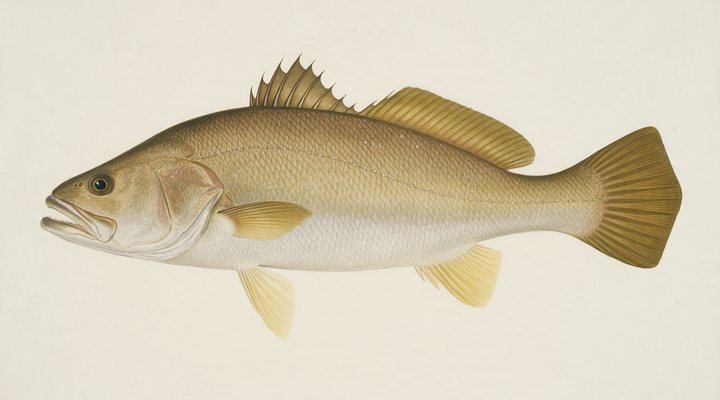
Mulloway, jewfish, jewie, butterfish when small: Argyrosomus japonicus is the big silver drum of the southern half of the continent, bronze-silver with a row of silvery spots along the lateral line, a large mouth and the drumming sound it makes that named it a croaker elsewhere. It grows past a metre and past twenty kilograms, lives for decades and matures late, which is why every state sets a high minimum size and why the agencies ask for released fish to be handled well. It lives in the estuaries as a juvenile, in the surf gutters, off the rock platforms and on the inshore reef as it grows, and it feeds on mullet, tailor, squid and whatever schools it can find, mostly after dark and on the tide change.
Where they live through the year
Summer and autumn are the mulloway months on the east coast: the fish are in the estuaries, at the breakwalls and in the beach gutters, and the best of it comes after rain, when a fresh pushes the bait to the mouths and the mulloway follow. Winter fish are fewer but bigger, on the rocks and the deeper reef. In South Australia the Coorong and the Murray mouth are the mulloway fishery of reputation, with the fish moving along the beaches of the Coorong through summer, and the Port River gives them in the city; in Western Australia the Swan and the south-west estuaries hold them. Everywhere, the night and the tide change are the time.
The mistakes that cost fish
Fishing in daylight on a sunny day at the wrong stage of the tide; mulloway are a night fish and a change-of-tide fish, and the two hours either side of the change after dark is the session. Using stale bait when the fish want fresh mullet, tailor or squid, or a live bait if one can be had. Fishing too light in the breakwall and the rocks, where the first run of a big fish goes for the structure. And keeping a fish under the minimum, which is high in every state for a reason; the species is slow to mature and the agencies say so.
Reading the report for mulloway
The tide panel on the coastal pages gives the change, which is the mulloway window; the rain row matters because a fresh brings them to the mouths; the moon module matters because the dark nights around the new moon fish better on many estuaries. Pressure counts less than for the bay fish. The species card rates the month; the calendar shows summer and autumn on the east coast and the Coorong summer in the south.
Tackle setups
| Situation | Setup | Why it works |
|---|---|---|
| Breakwall at night | 3 m rod rated 10 to 15 kg, 15 kg braid, 25 to 30 kg leader, running sinker, fresh mullet fillet or live bait | The first run goes for the rocks; the gear has to stop it |
| Estuary plastics | 2.1 m spin rod rated 4 to 8 kg, 10 kg braid, 15 kg fluorocarbon leader, 15 to 20 cm plastic on a 14 to 21 g jighead | Worked slowly along the deep edges on the change after dark |
| Beach gutters | 3.6 m rod rated 8 to 15 kg, 12 kg line, running sinker, whole mullet or tailor fillet | The gutter at high water in the dark, with the bait held in the current |
Playbook by water temperature
The plan the daily report picks for mulloway in each band; the water temperature on each page is a seasonal estimate for its type of water and says so.
Hot water (over 27 °C)
Night tides on the breakwalls and estuary holes with big live baits or fresh squid; a fresh in the river turns them on.
Warm water (18 to 27 °C)
Fish the deep holes and the rock walls through a tide change after dark; live mullet, yellowtail or a large soft plastic worked slowly.
Cool water (10 to 18 °C)
The estuary fish move to the deeper reaches. Long, quiet sessions on the bottom with fresh bait across the top of the tide.
Cold water (under 10 °C)
Scarce inshore; a winter fish or two off the deep beaches and breakwalls at night for the persistent.
Month by month
Activity for the southern year, 1 slow to 5 peak; January is midsummer. Current month highlighted.
Waters we cover for mulloway
120 Australia waters carry mulloway on their species card, each with a daily report.
New South Wales
Queensland
Common questions
When is the best time to catch mulloway?
After dark on the change of the tide, in summer and autumn on the east coast, and after rain when a fresh pushes bait to the estuary mouths. The fishing-times module on each coastal page shows the tide change.
What is the minimum size for mulloway?
High in every state, because the fish matures late; the figures differ by state and the agency page linked from each water has the current one.
What bait for mulloway?
Fresh mullet, tailor or squid, or a live bait, fished on the bottom in the channel or the gutter; large soft plastics of 15 to 20 cm worked slowly along the drop-offs after dark.