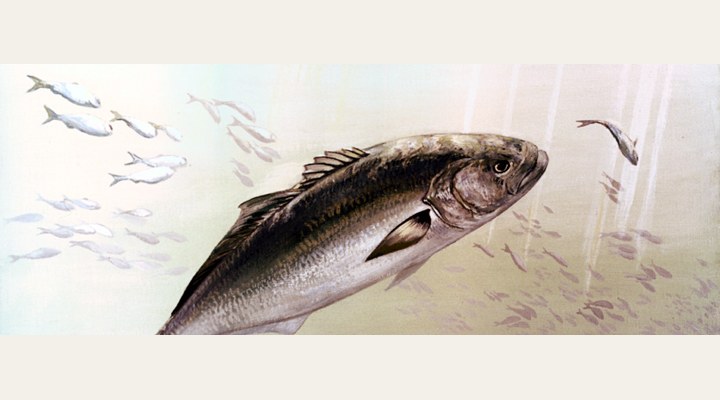
Identification and biology
Tailor is the Australian name for the bluefish of the Atlantic, Pomatomus saltatrix: a blue-green, silver-sided, fork-tailed predator with a mouthful of teeth that shear through a pilchard, a leader or a careless finger. It runs the east coast from Queensland to Victoria and the south-west of Western Australia in schools that follow the baitfish along the beaches, the rock platforms and the estuary mouths, and it spawns on the beaches of K’gari, Fraser Island, in late winter and spring in a run that Queensland manages with a closure of the spawning beaches. It is a fast-growing, fast-living fish, and the “choppers” of a kilogram are the everyday catch while the “greenbacks” of three and four kilograms are the fish of the winter beaches.
Where they live through the year
On the New South Wales coast tailor run the beaches and the rocks from autumn through winter and into spring, at dawn and dusk and after dark, moving up the coast toward the Queensland spawning grounds; the K’gari run peaks in August and September. In summer the smaller fish are in the estuaries and along the beaches in the mornings. In Western Australia the south-west beaches from Perth to the south coast fish through summer and autumn, and the Swan River and the estuaries hold the small ones. Tailor schools are visible: birds working, bait showering, a dark patch moving along a gutter.
The mistakes that cost fish
Fishing through the middle of the day when the schools feed at the change of light; the tailor hour is the half hour either side of sunrise and sunset. Fishing without a wire trace or a heavy leader and losing the metal or the ganged pilchard to the first fish. Casting to the beach instead of the gutter: tailor hunt where the bait is trapped, in the gutter between the bank and the beach and along the edge of the wash off the rocks. And keeping the spawning beaches’ rules in mind on K’gari, where the closure is dated and posted.
Reading the report for tailor
The wind and the swell decide the beaches and the rocks; a moderate onshore sea that stirs the gutters is tailor weather, a flat calm is not. The fishing-times module on each water page shows the dawn and dusk windows and, on the coast, the tide change; the rising tide into dusk is the classic beach session. The species card rates the month; the calendar shows autumn and winter on the east coast and the K’gari run in late winter.
Tackle setups
| Situation | Setup | Why it works |
|---|---|---|
| Beach at dusk | 3.6 m rod rated 6 to 10 kg, 8 to 10 kg line, ganged 4/0 hooks on a short wire or 25 kg mono trace, pilchard | Distance to the gutter and a trace that survives the teeth |
| Metals off the rocks | 2.7 to 3 m spin rod rated 6 to 10 kg, 15 kg braid, 20 to 25 kg leader, 30 to 40 g slug | Covers water fast and finds the school; the heavy leader takes the teeth |
| Estuary choppers | 2.1 m spin rod rated 3 to 6 kg, 6 kg braid, 10 kg leader, 15 to 20 g metal or small hardbody | The summer fish in the estuaries and bays are small, fast and everywhere |
Playbook by water temperature
The plan the daily report picks for tailor in each band; the water temperature on each page is a seasonal estimate for its type of water and says so.
Hot water (over 27 °C)
Chase the schools along the beach gutters at first and last light with metal slugs and pilchards on ganged hooks.
Warm water (18 to 27 °C)
Rock ledges and beach gutters on the rising tide; metals cast and retrieved fast, or a whole pilchard drifted through the wash.
Cool water (10 to 18 °C)
The main run. Fish the gutters and headlands into the evening; ganged pilchards, metals, and a wire-free trace only if you accept the bite-offs.
Cold water (under 10 °C)
Deeper gutters and the headlands after dark; the big greenbacks come in the coldest months on the northern beaches.
Month by month
Activity for the southern year, 1 slow to 5 peak; January is midsummer. Current month highlighted.
Waters we cover for tailor
136 Australia waters carry tailor on their species card, each with a daily report.
New South Wales
Queensland
Common questions
When is the tailor run on Fraser Island?
The K’gari spawning run peaks in August and September; the Queensland Government closes parts of the spawning beaches during it, and the dates are on its page, linked from the Queensland hub.
What is the best bait or lure for tailor?
A pilchard on ganged hooks cast into the gutter at dawn or dusk, or a 20 to 40 g metal slug retrieved fast; surface poppers and stickbaits when the school is on top.
Are tailor and bluefish the same fish?
Yes. Pomatomus saltatrix is called tailor in Australia and bluefish in the Americas and South Africa; the tactics translate.