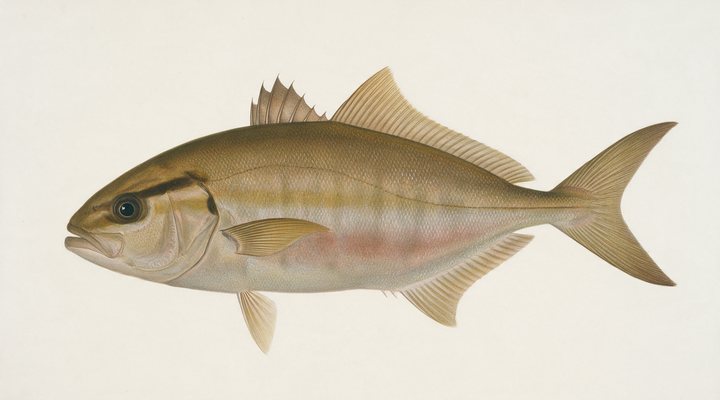
Identification and biology
The samson fish, Seriola hippos, is the heavyweight of the Australian amberjacks: deeper and broader than a kingfish, bronze-brown above, with a pale band across the head and a reputation for the most brutal fight of any fish an angler is likely to meet inshore. It ranges across the southern half of the continent, but Western Australia is where it matters: every summer the biggest known aggregation of the species gathers on the deep reef and the wrecks off Rottnest Island and the Perth coast, and a catch-and-release jig fishery has grown around it, supported by research tagging that showed the fish return to the same grounds. Samson fish are slow-growing and long-lived, and most anglers release them; the flesh is edible but soft.
Where they live through the year
The Rottnest trench aggregations run from about December to April, in eighty to a hundred and twenty metres, and the boats jig them on the calm days; the fish are also caught through the warm months around the inshore reefs and the wrecks of the south-west, and in the south, off Kangaroo Island and the western Victorian coast, as a by-catch of kingfish and reef fishing. In winter the schools disperse and the fish are scattered on the deeper reef. The Western Australian demersal closure does not apply to samson fish, which the Department lists among the pelagic and reef species anglers may still target from a boat in the West Coast bioregion.
The mistakes that cost fish
Going undergunned: a samson fish of thirty kilograms on a kingfish outfit is an hour of pain and a fish that may not survive it, and the jig fishery runs on heavy gear so the fight is short and the release good. Fishing without a release weight or a plan for a fish brought up from a hundred metres. Jigging too slowly; samson fish in the aggregation respond to a fast, erratic jig worked through the school, then stopped. And going out without the swell forecast: the trench is exposed and the calm summer days are the only days.
Reading the report for samson fish
The wind row and the Bureau’s swell forecast, which the report does not carry, decide the day; the sea breeze ends most Perth mornings on the water by early afternoon. Pressure matters little at depth. The water temperature estimate tracks the warm season the aggregation follows. The species card rates the month on the Western Australian waters; the calendar shows summer and autumn as the season.
Tackle setups
| Situation | Setup | Why it works |
|---|---|---|
| Jigging the aggregation | 1.7 to 1.9 m jig rod rated 24 to 37 kg, 37 kg braid, 60 to 80 kg leader, 250 to 400 g knife jig | Heavy gear keeps the fight short so the fish is released in good condition |
| Inshore reef by-catch | 2.1 m rod rated 15 to 24 kg, 24 kg braid, 40 to 60 kg leader, live bait or 150 g jig | The fish met while kingfish or reef fishing along the south-west coast |
| Release | Release weight rigged, 1 kg on a heavy line | A fish from 100 metres needs help back down |
Playbook by water temperature
The plan the daily report picks for samson fish in each band; the water temperature on each page is a seasonal estimate for its type of water and says so.
Hot water (over 27 °C)
Heavy jigging over the deep reef and the aggregation sites early; live baits on the wrecks.
Warm water (18 to 27 °C)
Prime. Knife jigs and big plastics worked over the reef edges and the bait schools.
Cool water (10 to 18 °C)
Fewer fish, deeper; jig the wrecks and the deeper lumps on the calm days.
Cold water (under 10 °C)
Scarce inshore; a deep-water fish for the dedicated.
Month by month
Activity for the southern year, 1 slow to 5 peak; January is midsummer. Current month highlighted.
Waters we cover for samson fish
16 Australia waters carry samson fish on their species card, each with a daily report.
Common questions
Where is the samson fish aggregation?
On the deep reef and wrecks off Rottnest Island and the Perth coast, in roughly 80 to 120 metres, from about December to April; the Perth and Rottnest area pages rate the month.
Can I keep samson fish during the WA demersal closure?
Samson fish are not among the demersal species covered by the West Coast closure; DPIRD lists them among the species anglers may still target from a boat. Bag and size limits apply; the Western Australia hub links the rule.
Are samson fish good to eat?
Edible but soft-fleshed, and most anglers release them; the aggregation fishery is run as catch and release with heavy gear so fights are short.