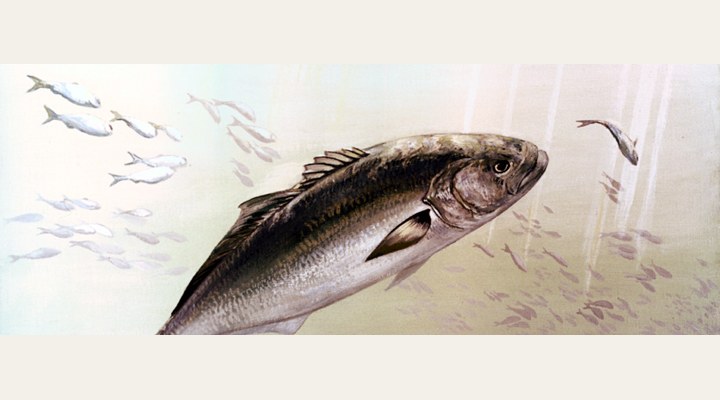
Built to cut
NOAA Fisheries describes bluefish as fast growers that reach 39 inches and 31 pounds, live up to 12 years and mature at age 2, at 15 to 20 inches. Razor-sharp teeth and shearing jaws let them cut prey into pieces, and the IGFA lists chopper and snapper blue among their common names. They school by size, and NOAA says a school can cover tens of square miles. Worldwide they live in temperate and tropical coastal seas everywhere except the eastern Pacific.
The migration
Bluefish move north in spring and summer as water warms and back south in fall and winter toward the South Atlantic Bight (NOAA, ASMFC). In summer the ASMFC places most fish between Maine and Cape Hatteras; in winter they tend to be offshore between Cape Hatteras and Florida. Spawning happens offshore from Massachusetts to Florida in spring-, summer- and fall-spawned groups that mix on the fishing grounds. North Carolina Sea Grant puts their optimum water temperature at 68°F and says anglers will almost never find them above 84°F or below 50°F.
Finding a blitz
NOAA uses the term bluefish blitz for big schools attacking bait at the surface, churning the water. Birds diving over breaking water are the usual sign. The ASMFC says anglers target them near inlets, shoals and rips where bait gathers, and the IGFA lists trolling, chumming, casting, jigging and live or dead bait from boats, beaches and piers among the methods that work.
Management
NOAA Fisheries, the Mid-Atlantic Fishery Management Council and the ASMFC manage bluefish together. The 2025 assessment found the stock no longer overfished and not subject to overfishing, but it remains in a rebuilding plan until spawning biomass reaches its target. Most of the catch is recreational: Amendment 2 allocates 86 percent of the quota to anglers, and about two-thirds of the fish anglers catch are released (ASMFC). Bag limits are set federally and by each state; see the state pages.
Handling
Those teeth call for a wire or heavy leader and pliers for unhooking; the IGFA warns bluefish can inflict serious bites even out of the water. For the table, bleed and ice fish quickly and eat them fresh, because the IGFA notes the flesh softens if not eaten soon and does not keep well frozen.
Temperature range
Typical range and spawning temperatures as published by the agencies listed under Pages checked; where agencies disagree, the text names each figure. See the full temperature guide.
Tackle setups
| Situation | Setup | Why it works |
|---|---|---|
| Surf casting | Long surf rod, metal spoon, plug or popper, short wire or heavy mono leader | Reaches feeding schools off the beach; the leader prevents cutoffs |
| Casting from a boat | Medium-heavy spinning rod, poppers, metal jigs or spoons on a wire or heavy leader | Cast to the edge of breaking fish rather than running through the school |
| Chunking and chumming | Medium-heavy rod, fish-finder rig, cut menhaden | Menhaden is a main prey (NOAA) and chumming is a standard method (IGFA) |
| Trolling | Conventional outfit, spoons or plugs on wire | Covers rips and shoals until fish show |
Playbook by water temperature
High summer (80F+)
In midsummer most bluefish are north of Cape Hatteras (ASMFC), and July and August carry most of the recreational harvest (NOAA). Fish low-light hours near inlets, rips and shoals and watch for birds over breaking bait.
Active season (65-80F)
Warming water pushes the schools north along the coast. Casting spoons and poppers into bait and chunking menhaden are the usual approaches; use a wire or heavy leader every time.
Transition (50-65F)
Fall turns the migration south toward the South Atlantic Bight, and fish feed along beaches and inlets on the way. Follow the bait and the birds.
Winter (under 50F)
Below about 50°F, North Carolina Sea Grant says anglers will rarely find bluefish; in winter they tend to be offshore between Cape Hatteras and Florida (ASMFC), so inshore fishing north of the Carolinas mostly ends.
Month by month
1 = slow, 5 = peak. Current month highlighted.
Best waters for bluefish
37 waters we report on where this species is one of the main fish, each with a daily report.
Cape Hatteras
Myrtle Beach
Sandy Hook
Montauk
Panama City Beach
Sebastian Inlet
St. Augustine
Charleston
Carolina Beach
Ocean City
Cape May
Barnegat
Fire Island
Cape Cod Canal
Plum Island
Hampton
Indian River Inlet
Narragansett
Stuart
Fort Pierce
Morehead City
Chesapeake Bay (Annapolis)
Saint Marks River
Susquehanna Flats
Nanticoke River
Assateague
Rehoboth Bay
Delaware Bay
Block Island
Point Judith
Great Bay
Sakonnet River
Buzzards Bay
Raritan Bay
Thames River
Greenwich Bay
Marthas Vineyard
Common questions
Are bluefish good to eat?
Yes, when fresh. The IGFA notes the flesh softens if not eaten soon and does not freeze well, so bleed and ice fish at once; NOAA lists fresh and smoked as the main markets.
When do bluefish run?
They move north in spring and summer and south in fall and winter (NOAA). Peak recreational harvest is May through October, with over 70 percent of it in July and August; Florida, North Carolina and New Jersey account for the largest shares.
How big do bluefish get?
NOAA gives a maximum of about 39 inches and 31 pounds, and the IGFA all-tackle record is 31 lb 12 oz.
Pages checked
- fisheries.noaa.gov/species/bluefish
- asmfc.org/species/bluefish
- ncseagrant.ncsu.edu/coastwatch/finding-fish-in-lots-of-water
- igfa.org/game-fish-database/?search_type=SpeciesID&search_term_1=95
The facts on this page were checked against these pages, from the agencies and research bodies that manage and study this fish on October 6, 2026; anything we could not verify was taken out.