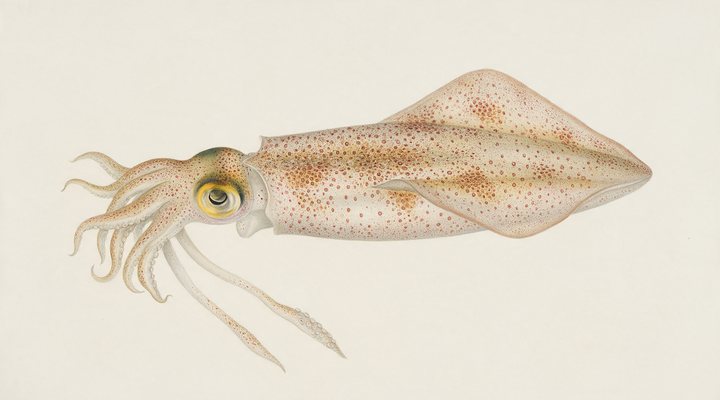
Identification and biology
Southern calamari, Sepioteuthis australis, is the squid of the southern bays: a broad-finned, fast-growing, short-lived cephalopod that lives about a year, spawns on the weed beds through spring and autumn and dies, and is caught over weed and sand in two to ten metres from Queensland’s southern coast round to Western Australia and Tasmania. The arrow squid of deeper water is a different animal and a different fishery. Calamari hunt by sight, at dawn, dusk and under lights at night, feeding on small fish and prawns, and they take a jig for the same reason: a small, bright, slowly sinking thing that looks like prey. Every state sets bag limits on them and some set closures on particular spawning grounds.
Where they live through the year
Spring and autumn are the peaks in the southern bays, when the adults come onto the inshore weed to spawn: Port Phillip and Western Port, the South Australian gulfs and the jetties of Yorke Peninsula, Cockburn Sound and the west coast, the east coast of Tasmania. Through summer the squid are there but smaller and more scattered, and through winter the deeper weed edges and the pier lights hold them. On the New South Wales coast squid work the weed off the rock platforms and the harbour walls all year, and in the north the tiger squid of the tropics replaces them.
The mistakes that cost fish
Retrieving too fast: a squid jig is worked with a lift and a long pause, and the take comes on the sink, so a jig that never pauses never gets taken. Fishing the wrong size: a 3.0 jig is the standard, a 2.5 for small squid and clear water, a 3.5 in the deeper or dirtier water, and the colour matters less than the sink rate. Casting into open sand instead of over the weed edge, where the squid hunt. And not checking the local closure, because several states close particular grounds during the spawning.
Reading the report for squid
Calamari fish best on a clear, calm morning or evening with the tide moving over the weed; the wind row and the tide panel on each coastal page tell you both. Pressure matters little. The moon module matters a little: the dark nights under the pier lights fish better. The species card rates the month; the calendar shows spring and autumn as the peaks.
Tackle setups
| Situation | Setup | Why it works |
|---|---|---|
| Jigs over the weed | 2.4 m egi rod or light spin rod rated 2 to 4 kg, 4 to 6 kg braid, 4 to 6 kg fluorocarbon leader, 2.5 to 3.5 jig | A long rod lifts the jig high and lets it sink slowly; the take is on the pause |
| Pier at night | 2.4 to 3 m rod rated 2 to 4 kg, 4 kg line, baited squid spike under a float or a 3.0 jig | The lights draw the bait and the squid follow |
| Boat over the beds | 2.1 m spin rod rated 2 to 4 kg, 6 kg braid, 6 kg leader, 3.0 to 3.5 jig | Drifting the weed edges in three to eight metres at first light |
Playbook by water temperature
The plan the daily report picks for southern calamari in each band; the water temperature on each page is a seasonal estimate for its type of water and says so.
Hot water (over 27 °C)
Dawn and dusk over the weed beds with 2.5 to 3.0 jigs; the jetty lights after dark.
Warm water (18 to 27 °C)
Prime. Drift the weed edges casting jigs, or a baited jig under a float from the piers.
Cool water (10 to 18 °C)
Spring and autumn are the seasons: the weed beds on the rising tide, slow sinking jigs.
Cold water (under 10 °C)
Deeper weed and the calm days; the piers at night when the water clears.
Month by month
Activity for the southern year, 1 slow to 5 peak; January is midsummer. Current month highlighted.
Waters we cover for southern calamari
70 Australia waters carry southern calamari on their species card, each with a daily report.
Victoria
Common questions
What size squid jig should I use?
A 3.0 is the standard for southern calamari; 2.5 in clear, shallow water or for small squid, 3.5 in deeper or dirtier water. The sink rate matters more than the colour.
When is the best time to catch squid?
Dawn and dusk over the weed beds in spring and autumn, and after dark under the jetty and pier lights; the species card on each water rates the month.
Is there a bag limit on squid?
Yes, in every state covered here, and some states close particular spawning grounds at times; the agency page linked from each water has the current rule.