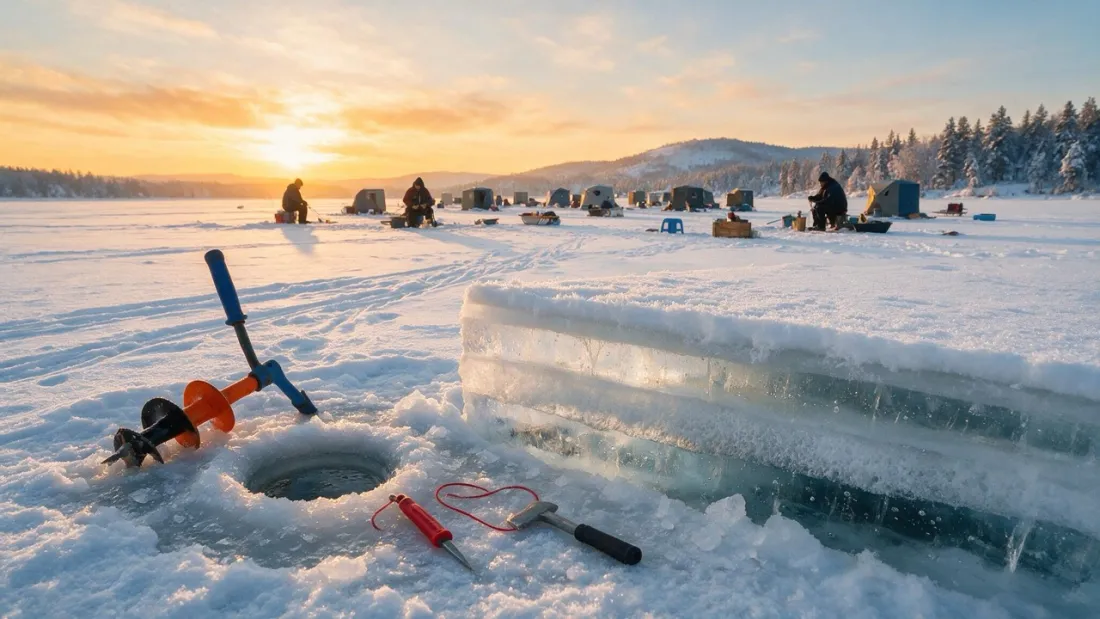
Thickness guidelines are a starting point, not a promise
The Minnesota DNR publishes minimum thicknesses for new, clear ice only: stay off anything under 4 inches; 4 inches for a person on foot; 5 to 7 inches for a snowmobile; 7 to 8 inches for an ATV or side-by-side; 9 to 12 inches for a car; 13 to 17 inches for a truck; and 20 inches or more for a heavy-duty truck pulling a wheelhouse shelter. The same poster is headed "ice is never 100% safe" and tells you to double the figures for white ice and to keep checking thickness as you go, because it varies. The Michigan DNR goes further: it says there is no reliable thickness in inches that makes ice safe. The Wisconsin DNR repeats that no ice is safe ice, and says the safest choice is to enjoy winter without traveling on ice at all.
Clear, white and slushy ice
According to the Michigan DNR, the strongest ice is clear with a bluish tint, and the weak kind is milky ice formed from snow that melted and refroze. Slush on top is a reason to stay off: Michigan rates slush ice at half the strength of clear ice and reads it as a sign the sheet is no longer freezing from below. Snow-covered ice should always be treated as unsafe, because snow insulates the ice, slows freezing, and a fresh snowfall can even melt what is there. Ice also weakens with age; a warm spell takes several days to soften it, and a sudden cold snap can crack it within half a day.
Where ice is thinner
The Wisconsin DNR lists the spots to check before you cross a lake: inlets, outlets and narrows, spring-fed areas and anything with current, aerators (some run over a large area mid-lake, others sit beside private piers), and pressure ridges or heaves, which can hide thin ice and open water and grow or shift with temperature swings and strong wind. The Michigan DNR adds shorelines that have open water along them, ice around logs, brush or other debris poking through, and the ice near dock bubblers and de-icers. The Minnesota DNR advice is to avoid pressure ridges and areas with current and to ask local experts about known hazards.
Gear the agencies recommend
Wear something buoyant: Minnesota and Wisconsin both call for a life jacket or float coat (Minnesota excepts the inside of an enclosed vehicle), and Wisconsin notes it also slows heat loss. Keep a pair of ice picks where you can reach them at once. Test as you walk with a spud bar, needle bar or auger. Wisconsin adds creepers on your boots for clear ice, a length of light rope in an easy pocket, spare mittens, dry clothes, and a charged phone in a waterproof bag, and Michigan asks for a two-way communication device that has signal where you are going. Tell someone where you will be and when you will be back, and, in Wisconsin's words, do not travel in unfamiliar areas or at night.
Vehicles on the ice
Machines are where the loads climb fastest. The Wisconsin DNR points out that a UTV can weigh close to 3,000 pounds, similar to a car or truck, and it reported six deaths in the 2024-25 season among people whose ATVs, UTVs and snowmobiles went through the ice or into open water. Its advice for anyone who drives on ice: window down, a door you can open easily, slow speed, the radio turned down so you can hear trouble coming, and a life jacket for every occupant of a UTV. Minnesota's poster says the same about the window and adds unlocking the doors. Check the thickness for the vehicle you are actually driving against the Minnesota figures above, and remember they assume new, clear ice.
If you go through
The National Weather Service warns that the first two to three minutes in cold water bring involuntary gasping and rapid breathing, which can turn into drowning if you inhale water; a life jacket buys time to get through it. The Michigan DNR's steps after that: stay calm and keep your winter clothes on, since they hold warmth rather than drag you down; turn back toward the way you came, where the ice is most likely strongest; dig the picks in and kick hard to slide forward onto the surface; then roll away from the hole to spread your weight. Get to shelter, change into dry clothes and drink something warm without alcohol or caffeine, and call 911 if you feel disoriented or cannot stop shivering. For anyone helping, the Wisconsin DNR recommends reaching with a rope or something similar so the rescuer does not go through as well, and calling for help as soon as possible.
Local knowledge
The Wisconsin DNR says it does not monitor ice conditions and points anglers to local fishing clubs, outfitters and bait shops, which do. Ask before you go, and still test the ice yourself as you walk, because thickness changes within yards. Our water pages carry the weather forecast for each lake but no ice measurements; they cannot tell you whether the ice will hold you.
Common questions
How thick should ice be to walk on?
The Minnesota DNR guideline is at least 4 inches of new, clear ice for a person on foot, and none under 4 inches; double that for white ice. The Michigan DNR stresses that thickness alone does not make ice safe, so check as you go with a spud bar or auger.
How thick does ice need to be for a car or truck?
For new, clear ice the Minnesota DNR lists 9 to 12 inches for a car, 13 to 17 inches for a truck, and 20 inches or more for a heavy-duty truck with a wheelhouse shelter. Double those for white ice, and drive with a window down and the doors unlocked.
What safety gear do I need for ice fishing?
Agency lists include a life jacket or float coat, a pair of ice picks within reach, a spud bar or auger to test the ice, boot creepers, a light rope, a phone in a waterproof bag and dry spare clothes. Tell someone your plan before you head out.
What should I do if I fall through the ice?
Control your breathing through the first minutes of cold shock, turn toward the direction you came from, dig in your picks and kick to slide out, then roll away from the hole. Get dry and warm quickly and call 911 if you show signs of hypothermia.
Pages checked
- files.dnr.state.mn.us/education_safety/safety/ice/ice-tickness-guidelines-poster
- michigan.gov/dnr/education/safety-info/ice
- dnr.wisconsin.gov/newsroom/release/116161
- dnr.wisconsin.gov/newsroom/release/118101
- weather.gov/safety/coldwater
The facts on this page were checked against these pages, from the agencies, scientific bodies and studies that cover the subject on October 6, 2026; anything we could not verify was taken out.