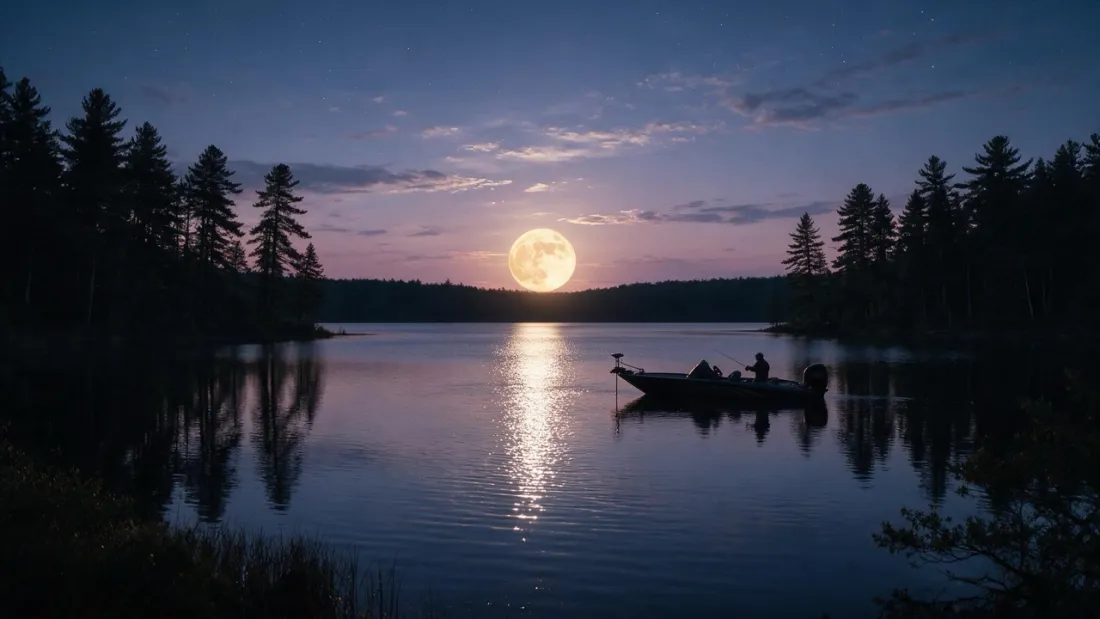
Two ways the moon reaches fish
The moon's gravity, with a smaller pull from the sun, raises the tides that move water along the coast. Its light changes how dark the night is. A third claim, that the moon's position overhead or underfoot makes fish feed even far from any tide, is solunar theory, and our separate guide covers the evidence for it.
The four daily lunar windows: majors overhead and underfoot, minors at rise and set.
New moon, full moon and the tides
NOAA explains that around new and full moon the sun and moon line up with the Earth, so their pulls add together and tidal ranges are slightly larger than average: these are spring tides, which have nothing to do with the season and happen twice a month. About seven days later, at the first and third quarter, the sun and moon pull at right angles and the smaller neap tides follow. Tidal currents follow the same cycle, running strong around new and full moon and weak around the quarters. On the coast, the phase therefore tells you how hard the water will move at a given spot.
What catch records show for each phase
In 341,959 muskellunge catch records, more fish were caught around the full and new moon than at other times, and at night more around the full moon than the new; the study found the effect strongest for big fish, in midsummer and at high latitudes, and did not find moonlight to be the explanation. At Escanaba Lake in Wisconsin, the odds of a successful walleye trip were highest in the waxing and waning gibbous phases and lowest at the quarter moons. Both studies measured effects of a few percent to about 10%, smaller than the effect of the angler's own choices. Not every study finds an effect: in a 2023 study of a recreational trout fishery, catch rates showed no significant relationship with the moon's phase or illumination, while air temperature did predict catches.
Where the phase matters less
In the Escanaba Lake records, guide use, bait type and how much of the walleye population had already been caught outweighed the moon. Below dams the water follows the release schedule, not the tide. On most lakes the season and the weather on the day will decide more than the phase.
How our reports use the moon
Each water page shows the phase and the percentage of the disk lit, and prints the day's solunar windows, calculated for that water's coordinates. Neither changes the 1-5 score, which comes from weather and season rules. If you want the moon in your plan, it is there to read; the score leaves it out because the measured effects are small.
Planning around the phase
Pick dates for season and weather first. When you are free to choose, the days around new and full moon are where the muskellunge records found a small advantage, and on the coast they bring the stronger spring-tide currents. For night fishing, the same records found the full moon ahead of the new moon. None of that outweighs a good weather day.
Common questions
Is fishing better on a full moon or new moon?
The large muskellunge study found catches higher around both, and at night the full moon came out ahead. At Escanaba Lake, walleye trips did best in the gibbous phases. The differences were small in both cases.
Do moon phases matter for lake fishing?
Studies of muskellunge and walleye catches found measurable but small effects, from about 5% to about 12%, and a 2023 trout study found none. Season, weather and how you fish matter more.
Why are tides bigger at full and new moon?
At full and new moon the sun, Earth and moon are nearly in line, so the sun's pull adds to the moon's and NOAA notes tidal ranges run slightly larger. These are called spring tides and occur twice a month.
Pages checked
- oceanservice.noaa.gov/facts/springtide.html
- oceanservice.noaa.gov/education/tutorial_currents/02tidal1.html
- journals.plos.org/plosone/article?id=10.1371/journal.pone.0098046
- journals.plos.org/plosone/article?id=10.1371/journal.pone.0257882
- doi.org/10.1007/s42452-023-05379-8
The facts on this page were checked against these pages, from the agencies, scientific bodies and studies that cover the subject on October 20, 2026; anything we could not verify was taken out.