Identification and life history
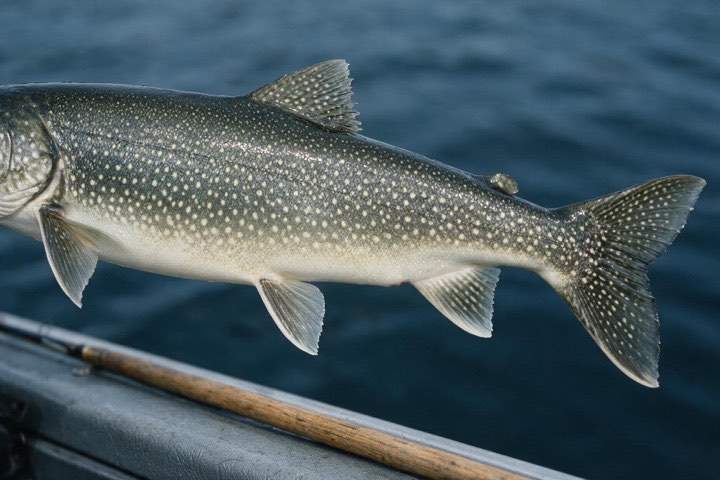
Salvelinus namaycush is a char with light spots on a dark gray to black background, a white belly, a deeply forked tail and white leading edges on the lower fins (Michigan DNR). It matures late, at six or seven years in Michigan and Vermont and later in the far north, and spawns over rocky shoals in fall, mostly at night, without digging a redd, returning to the same spawning areas each year. ADF&G says Alaska lake trout can live longer than 50 years, though typical maximum ages are around 20, and Michigan gives a lifespan that may pass 25. ADF&G also notes that low production makes them vulnerable to overfishing, since big, old fish take years to replace.
Native in the north, invasive in the West
Lake trout are native from Alaska and northern Canada south to New England and the Great Lakes basin, with a few native populations in Montana lakes such as Waterton and St. Mary (USGS). In the Great Lakes, Michigan DNR says overfishing and the sea lamprey severely reduced them between 1935 and 1965, and that lamprey control and stocking are bringing them back. In the West the picture reverses: USGS links introduced lake trout to the loss of native cutthroat in Lake Tahoe, to the near-elimination of cutthroat and bull trout in Flathead Lake and Lake Pend Oreille, and to an illegal introduction in Yellowstone Lake that the National Park Service has fought with gillnets.
Cold water and depth
Michigan DNR gives a preferred range of 40 to 55°F, and Vermont says lake trout prefer water below 60°F and need high oxygen. That sets the calendar: in fall, winter and spring Michigan finds them in 10 to 30 feet of water, and as the shallows warm they follow the cold down to 100 to 200 feet or more. In New York, NYSDEC names Cayuga and Seneca as the Finger Lakes for large lake trout and Keuka for numbers.
How they are caught
Trolling is the main method: Michigan DNR describes spoons, flashers and flies, or cowbells and minnows, often near bottom, and NYSDEC adds downriggers, divers and the Finger Lakes tradition of copper line. Vertical jigging has grown popular on the Finger Lakes, using half-ounce to one-ounce jigging spoons and lead jigs with white or chartreuse plastics, a depth finder and careful boat control. Vermont says most of its lake trout effort happens through the ice, and Michigan anglers jig spoons tipped with cut bait in Great Lakes bays in winter.
The mistakes that cost fish
Fishing the summer shallows: by midsummer Michigan's lakers are often 100 feet down or more. Jigging blind, when NYSDEC's method depends on finding fish or bait on the depth finder and holding the boat over them. And keeping every big fish: ADF&G notes that the large, old fish carry much of a population's biomass and take years to replace.
Temperature range
Preferred range and spawning temperatures as published by the agencies listed under Pages checked; where agencies disagree, the text names each figure. See the full temperature guide.
Tackle setups
| Situation | Setup | Why it works |
|---|---|---|
| Vertical jigging | Medium to medium-heavy rod with low-stretch line, ½- to 1-oz jigging spoon or lead jig with a white or chartreuse plastic | The Finger Lakes method NYSDEC describes, used over fish marked on the depth finder |
| Deep trolling | Downrigger, diver or copper line with spoons, or a flasher with a fly or minnow | Keeps lures in the cold band through summer (Michigan DNR, NYSDEC) |
| Ice | Stout ice rod, spoon or jig tipped with cut bait | Michigan DNR's winter method in Great Lakes bays |
Playbook by water temperature
High summer (80F+)
Lake trout sit far below the warm surface layer, often 100 feet or more down in summer by Michigan DNR's figures; troll downriggers or copper line through the cold water, or jig over fish marked on the depth finder.
Active season (65-80F)
Fish are moving deeper as the lake stratifies; troll or jig along the top of the cold water and use the depth finder to locate bait.
Transition (50-65F)
Spring and fall bring lakers into 10 to 30 feet of water (Michigan DNR), within reach of casters and shallow trollers; fall is also spawning time over rocky shoals.
Winter (under 50F)
Winter: Vermont says most of its lake trout fishing is done through the ice, and Michigan anglers jig spoons tipped with cut bait in deep Great Lakes bays.
The legal season is a separate question
Everything above is about the fish. When you are allowed to keep one is a different matter entirely, set state by state, and in several states the possession season is shut for months while the water stays open for catch-and-release. Those dates are not on this page on purpose: they belong with the agency that sets them, alongside the sizes and limits that come with them.
Month by month
1 = slow, 5 = peak. Current month highlighted.
Best waters for lake trout
57 waters we report on where this species is one of the main fish, each with a daily report.
Fort Peck Lake
Raystown Lake
Sebago Lake
Eagle Lake
Lake Ontario
Flaming Gorge Reservoir
Jackson Lake
Lake Michigan (Chicago)
Lake Granby
Oak Orchard Creek
Sheboygan (Lake Michigan)
Higgins Lake
Grindstone Lake
Twin Lakes
Kenai Lake
Lake George
Moosehead Lake
Lake Winnipesaukee
Lake Willoughby
Seneca Lake
Keuka Lake
Canandaigua Lake
Owasco Lake
Saranac Lake
Otsego Lake
Round Valley Reservoir
Torch Lake
Lake Chelan
Priest Lake
Ruedi Reservoir
Heron Lake
Quabbin Reservoir
Squam Lake
Newfound Lake
Lake Memphremagog
Fremont Lake
Seymour Lake
Lake Sunapee
Big Green Lake
Manistique River
Wallowa Lake
Odell Lake
Fish Lake
Skilak Lake
Pactola Reservoir
Lake Charlevoix
Wachusett Reservoir
First Connecticut Lake
Ossipee Lake
Chesuncook Lake
China Lake
Lake Winnisquam
Umbagog Lake
Coventry Lake
East Grand Lake
Merrymeeting Lake
Damariscotta Lake
Common questions
How deep do lake trout live?
It depends on the season. Michigan DNR finds them in 10 to 30 feet in fall, winter and spring, and at 100 to 200 feet or more in summer as they follow water of about 40 to 55°F.
How long do lake trout live?
Alaska fish can live more than 50 years, though ADF&G says typical maximum ages are around 20; Michigan DNR says lifespan may exceed 25 years. They first spawn at about six or seven years old.
Are lake trout native to western lakes such as Tahoe or Flathead?
No. USGS lists them as introduced there and links them to the decline of native cutthroat and bull trout, while a few Montana lakes such as Waterton and St. Mary hold native populations.
What is a splake?
A cross between a lake trout and a brook trout, usually produced in hatcheries; Michigan DNR says splake live 5 to 10 years and can reach 16 pounds.
Pages checked
- michigan.gov/dnr/education/michigan-species/fish-species/lake-trout
- adfg.alaska.gov/index.cfm?adfg=laketrout.main
- vtfishandwildlife.com/learn-more/vermont-critters/fish/lake-trout
- nas.er.usgs.gov/queries/FactSheet.aspx?speciesID=942
- dec.ny.gov/things-to-do/freshwater-fishing/places-to-fish/finger-lakes/fishing
The facts on this page were checked against these pages, from the agencies and research bodies that manage and study this fish on October 6, 2026; anything we could not verify was taken out.