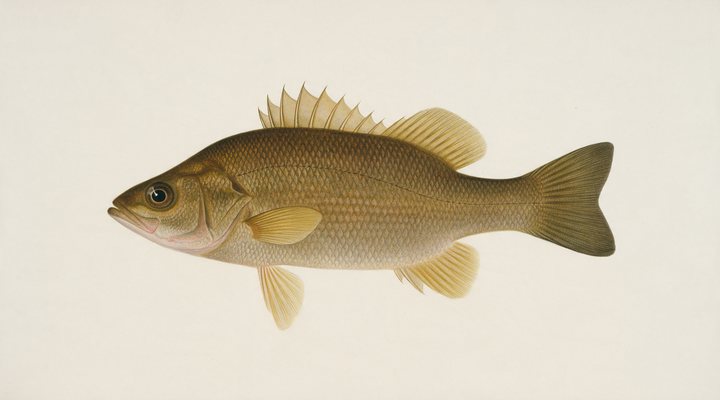
Identification and biology
The Australian bass, Percalates novemaculeata, is the native sportfish of the east coast rivers from southern Queensland to eastern Victoria: a compact, deep, olive-bronze fish with a forked tail, a large mouth and an explosive take on a surface lure that has made it the summer obsession of the coastal river anglers. It is catadromous: it lives in the fresh reaches of the rivers and migrates downstream in winter to spawn in the brackish estuaries, which is why New South Wales closes the rivers to bass from May to August and Queensland closes its tidal waters from June to August; dams are stocked with hatchery fish that cannot complete the cycle and are open all year. Bass are slow-growing and long-lived, and the big river fish are old.
Where they live through the year
From spring to autumn the bass are in the fresh reaches of every coastal river, from the tidal limit up into the gorges: the snags, the overhanging banks, the rock bars and the deep pools, feeding at dawn, dusk and at night on cicadas, beetles, prawns and small fish. Summer is the surface season, when a cicada imitation or a small popper cast under the trees at dusk draws the strike the species is known for. In autumn they move downstream, and through winter they are in the estuaries spawning and closed to fishing in the rivers. In the stocked dams, Somerset, Wivenhoe, Glennies Creek, St Clair, Glenbawn, the schools hold deep off the points in the cool months and spread along the edges in the warm ones, and the dams are open all year.
The mistakes that cost fish
Fishing the rivers in the closed season, which is 1 May to 31 August in New South Wales and 1 June to 31 August in Queensland’s tidal waters; the state hubs compute it and each bass river page shows its status today. Fishing the middle of the day in summer, when the bass are under the banks and the bite is at dusk and after dark. Casting to the open water instead of tight to the snag or the overhang, where the fish sit. And treating the dam fish like river fish: the schooled bass of Somerset are found with a sounder and caught on plastics, blades and ice jigs worked through the school, not on a surface lure under a tree.
Reading the report for bass
The water temperature estimate and the calendar show the warm surface season and the cold schooling season; the rain row matters in the rivers, where a fresh moves the fish and colours the water; the moon module matters on the summer nights. On the gauged dams the level chart shows the water the schools relate to. The species card rates the month, the season line says whether the river is open today, and the dams say they are open all year.
Tackle setups
| Situation | Setup | Why it works |
|---|---|---|
| River surface at dusk | 1.8 to 2 m baitcast or spin rod rated 2 to 4 kg, 6 kg braid, 6 to 8 kg leader, 50 to 65 mm popper or cicada | Cast under the overhangs; the take is the reason people fish for bass |
| Snags by day | 2 m spin rod rated 2 to 4 kg, 6 kg braid, 8 kg leader, 1/4 oz spinnerbait or 60 to 75 mm suspending hardbody | Worked tight to the timber and the rock bars |
| Dam schools | 2.1 m spin rod rated 2 to 4 kg, 4 to 6 kg braid, 6 kg leader, 5 to 7 g blade, ice jig or 75 mm plastic | Found with a sounder off the points and worked through the school |
Playbook by water temperature
The plan the daily report picks for australian bass in each band; the water temperature on each page is a seasonal estimate for its type of water and says so.
Hot water (over 27 °C)
Surface lures at dawn and dusk along the shaded banks and the snags; in the dams, the schools on the deeper points by day.
Warm water (18 to 27 °C)
Prime. Cast spinnerbaits, small hardbodies and surface lures tight to structure in the rivers; sound up the schools in the dams.
Cool water (10 to 18 °C)
Dam fish school deep; vertical jig plastics and blades over them. Rivers slow, and closed in NSW from June.
Cold water (under 10 °C)
Dams only: deep schools, small blades and plastics, slow.
The legal season is a separate question
Activity says when the fish bite; the agency says when you may keep one. These are the closures that name australian bass, computed for 2026 from each rule as written and read on the date shown. A state with no row publishes no closure for this species, which is not the same as open all year.
| State | Fishery | 2026 | Rule | Source |
|---|---|---|---|---|
| New South Wales | Australian bass and estuary perch in rivers | Closed 2026-05-01 to 2026-08-31 | Closed 1 May to 31 August in all rivers except rivers above impoundments; dams are not closed. | DPIRD NSW, summary of freshwater closures, read 2026-09-23 |
Month by month
Activity for the southern year, 1 slow to 5 peak; January is midsummer. Current month highlighted.
Waters we cover for australian bass
74 Australia waters carry australian bass on their species card, each with a daily report.
Queensland
New South Wales
Common questions
When is bass closed season in New South Wales?
Australian bass and estuary perch are closed in all rivers, except rivers above impoundments, from 1 May to 31 August; dams are not closed. The New South Wales hub shows the rule and its source, DPIRD.
Are Australian bass and estuary perch the same fish?
No. They are related species that share the rivers and the closed season; the estuary perch lives lower in the system and has a more concave forehead. The rules cover both.
What is the best lure for Australian bass?
In summer, a cicada imitation or a small popper cast under the trees at dusk; through the day, a small spinnerbait, a 60 to 75 mm soft plastic or a suspending hardbody worked tight to the snags; in the dams, a plastic, a blade or an ice jig worked through the school.