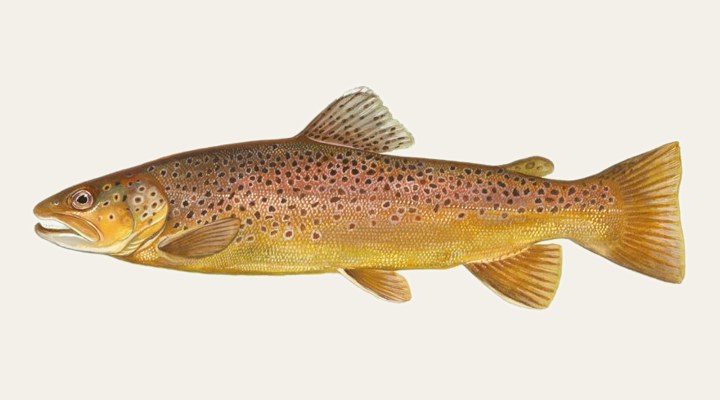
Identification and history
Salmo trutta is native to Europe, North Africa and western Asia. The US Fish Commission imported it from Germany in 1883 and stocked Michigan's Pere Marquette River (USGS), and most states followed in the late 1800s or early 1900s. Michigan DNR describes a square tail, light pectoral fins and a broad tongue with large teeth; lake-run fish turn mostly silver, their spots fainter than on stream fish. Brown trout have since been stocked in nearly every state, but USGS notes that natural reproduction is low or absent in many of them, which keep populations going by stocking.
Temperature and spawning
Vermont Fish & Wildlife puts the optimum at 53 to 66°F and says browns can stand water near 80°F for short periods, more than other trout, and they typically hold the lower reaches of cold streams, in deep, slow pools and runs; Michigan DNR gives 50 to 65°F and says browns are the main target in many marginal rivers there. They spawn in fall over gravel at the tail of pools: September and October in Michigan, late October through December in Vermont at 44 to 48°F. Lake fish need tributaries to spawn, and Michigan's lake-run browns gather near stream mouths from late summer.
Feeding and habits
Small browns eat mostly insects; Vermont notes that above about ten inches they shift toward fish and crustaceans, and that mature stream browns feed mainly at night while lake fish feed more in daylight. Michigan lists insects, crustaceans, mollusks, amphibians, small rodents and other fish in the adult diet. Hence the methods Michigan DNR describes: fly fishing after dark during big hatches such as the Hexagenia mayfly, large streamers and mouse patterns, and an expectation that stream browns bite better on rainy or overcast days.
Great Lakes and lake fisheries
Browns in the Great Lakes give some of the earliest open-water fishing of the year: Michigan DNR describes spring fishing from piers, by wading and by trolling inshore with minnow-imitating plugs, often before other species start to bite, and says lake-run adults average about eight pounds. Inland, Vermont stocks browns only in carefully chosen lakes, because they grow large there and eat other fish, including stocked trout.
The mistakes that cost fish
Fishing only the bright middle of the day, when mature stream browns feed least. Walking through spawning gravel in fall and winter: browns dig redds at the tails of pools, and Vermont records incubation of about 148 days at 35°F, so eggs sit in that gravel all winter. And bringing trout tackle sized for small stream fish to the Great Lakes, where Michigan says lake-run browns average eight pounds.
Temperature range
Preferred range and spawning temperatures as published by the agencies listed under Pages checked; where agencies disagree, the text names each figure. See the full temperature guide.
Tackle setups
| Situation | Setup | Why it works |
|---|---|---|
| Streamers | 6- or 7-weight fly rod, sinking-tip line, large streamer | Michigan DNR names large streamers among the flies that produce big browns |
| Hatch fishing | 9-ft rod for a 4- or 5-weight line, long fine leader | For evening and night fishing during big hatches such as Hexagenia (Michigan DNR) |
| Mouse patterns at night | Stout fly rod, mouse pattern; check local rules on night fishing | Michigan DNR lists big splashy surface flies such as mouse patterns |
| Spinning | Light to medium spinning rod, spinners or minnow-imitating plugs | Michigan DNR notes spinners and artificial minnows take browns in streams and on the Great Lakes |
Playbook by water temperature
High summer (80F+)
Above 80°F is past even the brief tolerance Vermont gives for browns; leave stream fish alone and look instead for spring-fed or tailwater reaches that stay cool.
Active season (65-80F)
Upper end of the range: fish dawn, dusk, night or cloudy days, with terrestrial flies along the banks and streamers through the deeper runs.
Transition (50-65F)
Close to Vermont's 53-66°F optimum, browns feed more freely; in fall, pre-spawn fish move toward tributaries and gravel, so fish streamers and keep off the redds.
Winter (under 50F)
Below 50°F, fish slowly through the deeper pools; in early spring on the Great Lakes, Michigan DNR notes browns are often caught inshore before other species start biting.
The legal season is a separate question
Everything above is about the fish. When you are allowed to keep one is a different matter entirely, set state by state, and in several states the possession season is shut for months while the water stays open for catch-and-release. Those dates are not on this page on purpose: they belong with the agency that sets them, alongside the sizes and limits that come with them.
Month by month
1 = slow, 5 = peak. Current month highlighted.
Best waters for brown trout
228 waters we report on where this species is one of the main fish, each with a daily report.
Lake Lanier
Madison River
Bighorn River
Gallatin River
Eagle River
Clearwater River
Green River
Greers Ferry Lake
Henrys Fork
Norfork Lake
Deschutes River
North Platte River (Grey Reef)
South Platte River (Deckers)
Blue River (Silverthorne)
Antero Reservoir
Gunnison River
Taylor River
Big Thompson River
Roaring Fork River
Clear Creek (Golden)
Provo River
Rock Creek
Bitterroot River
Georgetown Lake
Canyon Ferry Lake
Clark Fork River (Missoula)
Feather River
Trinity River (CA)
Yakima River
Crooked River
Owyhee River
Pere Marquette River
Niagara River
San Juan River (Navajo Dam)
Sebago Lake
Yellowstone River
Blackfoot River
Boulder River
Snake River (South Fork)
Boise River
Sacramento River
Lake Ontario
Little Red River
Panguitch Lake
Lake Michigan (Chicago)
Root River
Silver Creek
Diamond Lake
Grand River
Toccoa River
Smith River
Muskegon River
Housatonic River
Lake Taneycomo
Truckee River
Metolius River
Grande Ronde River
Beaverhead River
Spring Creek
Little Juniata River
Farmington River
Lake Granby
Woods Canyon Lake
Missouri River (Craig)
Big Hole River
Jefferson River
Cattaraugus Creek
Walnut Creek
Guadalupe River
Sheboygan (Lake Michigan)
Bennett Spring
Lake Jocassee
Yellow Breeches Creek
Davidson River
Spinney Mountain Reservoir
South Fork Boise River
St. Joseph River
Rufus Woods Lake
Pecos River
Kern River
Yuba River
Owens River
Lake Wallenpaupack
Kalama River
Ausable River
Chattooga River
Uncompahgre River
Black River
Strawberry River
Caples Lake
East Lake
Minersville Reservoir
Oswego River
Oconto River
Humptulips River
Otisco Lake
Lake Burton
Little Manistee River
Platte River
Trask River
San Miguel River
Ogden River
Otter Creek Reservoir
Starvation Reservoir
Tarryall Reservoir
Crystal River
Gore Creek
Horsetooth Reservoir
Stillwater River
Betsie River
Saint Joe River
Gunpowder River
Russian River
Don Pedro Reservoir
Ennis Lake
Holter Lake
Lewis River
Tellico River
Scofield Reservoir
Beaverkill
Willowemoc Creek
Esopus Creek
West Branch Delaware River
Salmon River
Penns Creek
Au Sable River
Chattahoochee River
Dillon Reservoir
Kewaunee River
Putah Creek
Oak Creek
Flathead River
Mooselookmeguntic Lake
Kennebec River
Androscoggin River
Battenkill
Seneca Lake
Keuka Lake
Canandaigua Lake
Owasco Lake
Otsego Lake
Round Valley Reservoir
Juniata River
Lehigh River
Hebgen Lake
Clark Canyon Reservoir
Ruedi Reservoir
Vallecito Reservoir
Ridgway Reservoir
Deerfield River
Swift River
Newfound Lake
Wildhorse Reservoir
Lake Memphremagog
Herrington Lake
Lake Moomaw
Abiquiu Lake
Bluewater Lake
Trinidad Lake
Fremont Lake
Magic Reservoir
Mansfield Hollow Lake
Waterbury Reservoir
Onota Lake
Big Green Lake
Bois Brule River
Menominee River
Manistique River
Tahquamenon River
Ontonagon River
Skykomish River
Elwha River
Lochsa River
Fish Lake
Tenkiller Ferry Lake
Barren River Lake
Comins Lake
Pactola Reservoir
Sacandaga River
Genesee River
Elk Creek
Current River
Spring River
Saco River
Pemigewasset River
Pawcatuck River
Caney Fork River
Musconetcong River
West Branch Susquehanna River
Kennebago Lake
Penobscot River
Whiskeytown Lake
Detroit Lake
Kootenai River
Snake River
Green River
Arkansas River
Yampa River
Rio Grande
Huntington Creek
Rio Grande
Cimarron River
Colorado River
Carson River
Whitewater River
Kickapoo River
Kinnickinnic River
Upper Iowa River
Niangua River
Hiwassee River
Nantahala River
Jackson River
Cranberry River
Pawtuxet River
Cave Lake
Saluda River
Illinois River
Cache la Poudre River
Wind River
Westfield River
Ossipee Lake
China Lake
Lake Bomoseen
Savage River
Williams River
Laurel River Lake
White Clay Creek
Ruby Lake
Common questions
When do brown trout spawn?
In fall. Michigan DNR gives September and October; Vermont gives late October through December, at water temperatures of 44 to 48°F.
Why are brown trout harder to catch than other trout?
Partly timing: Vermont Fish & Wildlife notes that mature stream browns feed mainly at night, and Michigan DNR says they bite better on rainy or overcast days, so dawn, dusk, night and cloudy weather improve the odds.
Are brown trout native to the US?
No. They were first imported from Germany in 1883 and stocked in Michigan's Pere Marquette River, then spread to nearly every state through stocking (USGS).
Pages checked
- vtfishandwildlife.com/learn-more/vermont-critters/fish/brown-trout
- michigan.gov/dnr/education/michigan-species/fish-species/brown-trout
- nas.er.usgs.gov/queries/FactSheet.aspx?speciesID=931
The facts on this page were checked against these pages, from the agencies and research bodies that manage and study this fish on October 6, 2026; anything we could not verify was taken out.