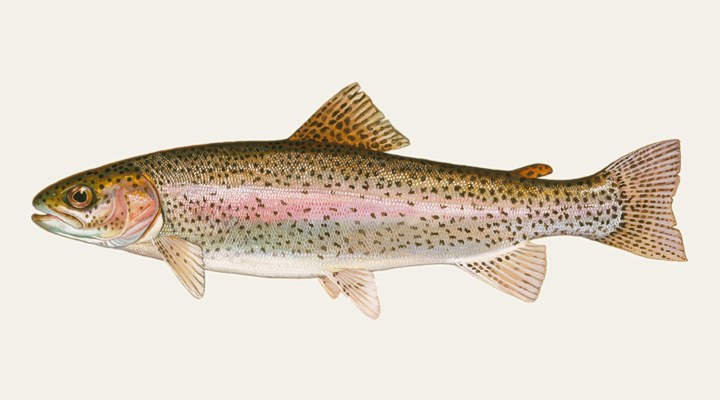
Identification and biology
Oncorhynchus mykiss has a bluish-green back, silver sides and black spots over the body and the tail, dorsal and adipose fins, usually with a reddish stripe along the side (WDFW). Steelhead are the same species, the form that migrates to sea, or to the Great Lakes, before returning to spawn. Most wild rainbows spawn in spring, March through May in Vermont, digging redds in gravel, although hatchery breeding has produced strains that spawn in fall. Vermont Fish & Wildlife gives a typical life of three to five years, and WDFW an average length of 11 to 18 inches, with fish over 20 inches in quality waters.
Temperature sets the season
Vermont Fish & Wildlife gives a preferred range of 54 to 66°F for stream rainbows and 45 to 64°F for lake fish, with 77°F as the most they can tolerate. That matches the WDFW calendar for lakes: fishing is best in spring, falls off as the water warms and fish move offshore and deeper, then picks up in fall when they come back to the shallows. In rivers, the warmest summer afternoons are the time to stop fishing.
Where they hold in rivers
Vermont describes rainbows in moderate- to high-gradient streams with swift riffles and deep, clear pools, using the deepest water at low summer flows and in winter, and the slack pocket water behind rocks and wood within riffles. Stream fish feed mostly on drifting aquatic and terrestrial insects. Michigan DNR notes young fish start on water fleas before adding caddisflies, mayflies and midges, and that larger rainbows add small fish.
Stocked fisheries
Much rainbow fishing is built on stocking. WDFW stocks millions each year for anglers and publishes weekly stocking reports, and Vermont notes that rainbows in its southeast depend on stocking because the low-alkalinity water there does not support reproduction. Michigan received its first rainbows as eggs from California in 1876. Where they were introduced in the West, USGS records hybridization with native cutthroat, golden, Gila and Apache trout.
The mistakes that cost fish
Wading in before looking: rainbows hold in pocket water and seams near the bank, and a careless approach clears them out. Ignoring the thermometer in midsummer, when stream water near the upper 70s °F is past what Vermont lists as their limit. And handling fish with dry hands: WDFW advises wetting your hands before touching a fish you will release, so its protective slime stays on.
Temperature range
Preferred range and spawning temperatures as published by the agencies listed under Pages checked; where agencies disagree, the text names each figure. See the full temperature guide.
Tackle setups
| Situation | Setup | Why it works |
|---|---|---|
| General river fly | 9-ft rod for a 4- or 5-weight line, floating line, tapered leader | Handles dry flies, nymphs and small streamers on most trout rivers |
| Streamers | Heavier fly rod with a sinking-tip line | Gets larger flies down to fish holding deep |
| Spinning | Light spinning rod and light line, small spinners or spoons | WDFW lists spinners and spoons among effective lures |
| Lakes | Troll spinners, flies or spoons, or suspend bait under a float; fish near bottom in summer | WDFW's approach: near the surface in cool months, deeper when the water warms |
Playbook by water temperature
High summer (80F+)
Water above 80°F is past the 77°F that Vermont Fish & Wildlife gives as the rainbow's limit: leave stream fish alone, and in lakes fish only the deep, cold water where WDFW says they go in summer.
Active season (65-80F)
The top of this band is already stressful. In rivers fish mornings and evenings; in lakes WDFW notes rainbows turn sluggish and go deeper, so troll or suspend bait near the bottom.
Transition (50-65F)
This band overlaps Vermont's 54-66°F stream preference: fish feed across riffles, runs and pocket water, and in lakes WDFW says spring and fall bring them near the surface.
Winter (under 50F)
In cold water rainbows use the deepest pools in rivers (Vermont), so slow, deep drifts there are the usual approach; Michigan DNR notes lake rainbows are also taken with bait or by jigging through the ice.
The legal season is a separate question
Everything above is about the fish. When you are allowed to keep one is a different matter entirely, set state by state, and in several states the possession season is shut for months while the water stays open for catch-and-release. Those dates are not on this page on purpose: they belong with the agency that sets them, alongside the sizes and limits that come with them.
Month by month
1 = slow, 5 = peak. Current month highlighted.
Best waters for rainbow trout
301 waters we report on where this species is one of the main fish, each with a daily report.
Lake Lanier
Madison River
Bighorn River
Gallatin River
Eagle River
Clearwater River
Green River
White River
Dale Hollow Lake
Henrys Fork
Broken Bow Lake
Norfork Lake
Lake Sakakawea
Banks Lake
Deschutes River
North Platte River (Grey Reef)
South Platte River (Deckers)
Blue River (Silverthorne)
Antero Reservoir
Gunnison River
Taylor River
Big Thompson River
Roaring Fork River
Clear Creek (Golden)
Provo River
Strawberry Reservoir
Weber River
Big Lake (White Mountains)
Rock Creek
Bitterroot River
Georgetown Lake
Canyon Ferry Lake
Clark Fork River (Missoula)
Big Bear Lake
Cowlitz River
Yakima River
Crooked River
Owyhee River
Pere Marquette River
Boone Lake
Kenai River
San Juan River (Navajo Dam)
Candlewood Lake
Sebago Lake
Yellowstone River
Blackfoot River
Boulder River
Snake River (South Fork)
Boise River
Eagle Lake
Lake Ontario
Little Red River
Panguitch Lake
Lake Michigan (Chicago)
Root River
Fresno Reservoir
Silver Creek
Diamond Lake
Collins Lake
Watauga Lake
Toccoa River
Muskegon River
Housatonic River
Diamond Valley Lake
Lake Taneycomo
Folsom Lake
Castaic Lake
Silverwood Lake
Lake Almanor
Truckee River
Metolius River
Beaverhead River
Spring Creek
Little Juniata River
Farmington River
Lake Granby
Woods Canyon Lake
Missouri River (Craig)
Big Hole River
Jefferson River
Skagit River
Walnut Creek
Guadalupe River
Lake Amador
Bennett Spring
Lake Jocassee
South Holston Lake
New Melones Lake
Yellow Breeches Creek
Davidson River
Spinney Mountain Reservoir
South Fork Boise River
Shaver Lake
Rufus Woods Lake
Pecos River
Lake Sonoma
Lake Isabella
Lake Del Valle
Lake Cuyamaca
Kern River
Blackfoot Reservoir
Owens River
Jordanelle Reservoir
Bear Lake
Ausable River
Chattooga River
Uncompahgre River
Black River
Strawberry River
Caples Lake
East Lake
Minersville Reservoir
Oconto River
Fool Hollow Lake
San Miguel River
Ogden River
Otter Creek Reservoir
Starvation Reservoir
Evergreen Lake
Tarryall Reservoir
Stampede Reservoir
New Hogan Lake
Riffe Lake
Lake Merwin
Crystal River
Bear Creek
Gore Creek
Steamboat Lake
Horsetooth Reservoir
Stillwater River
Dworshak Reservoir
Saint Joe River
Gunpowder River
Watauga River
Lake Kaweah
Don Pedro Reservoir
Conneaut Creek
Patagonia Lake
Ennis Lake
Holter Lake
Boyd Lake
Twin Lakes
Kenai Lake
Tellico River
Crane Prairie Reservoir
Scofield Reservoir
Esopus Creek
West Branch Delaware River
Au Sable River
Chattahoochee River
Dillon Reservoir
Elevenmile Canyon Reservoir
Kanopolis Lake
Putah Creek
Lake McClure
Oak Creek
Flathead River
Rangeley Lake
Moosehead Lake
Androscoggin River
Lake Willoughby
Battenkill
Seneca Lake
Keuka Lake
Canandaigua Lake
Owasco Lake
Great Sacandaga Lake
Saranac Lake
Otsego Lake
Round Valley Reservoir
Torch Lake
Upper Klamath Lake
Lake Mohave
Lehigh River
Seminoe Reservoir
Neely Henry Lake
Canyon Lake
Lake Ogallala
Pathfinder Reservoir
Hebgen Lake
Clark Canyon Reservoir
Ruedi Reservoir
Vallecito Reservoir
Ridgway Reservoir
American Falls Reservoir
Cascade Reservoir
Wood River
Quabbin Reservoir
Deerfield River
Swift River
Newfound Lake
Wildhorse Reservoir
Topaz Lake
Lake Memphremagog
White River
Calamus Reservoir
Herrington Lake
Lake Sharpe
Russian River
Beltzville Lake
Philpott Lake
Lake Moomaw
Tims Ford Lake
Clinch River
Abiquiu Lake
Bluewater Lake
Trinidad Lake
Fremont Lake
Magic Reservoir
Anderson Ranch Reservoir
Lucky Peak Reservoir
Mansfield Hollow Lake
Saugatuck Reservoir
Waterbury Reservoir
Seymour Lake
Onota Lake
Webster Lake
Nolin River Lake
Bois Brule River
Big Manistee River
Baker Lake
Lake Roosevelt
Wallowa Lake
Lake Perris
Salmon River
Lochsa River
Selway River
Fish Lake
Missouri River
Situk River
Pine Flat Lake
Tenkiller Ferry Lake
South Fork Reservoir
Comins Lake
Pactola Reservoir
Sacandaga River
Allegheny River
Moses Lake
Current River
Meramec River
Eleven Point River
Spring River
Saco River
Pemigewasset River
Pawcatuck River
Bankhead Lake
Duck River
Caney Fork River
Brandywine Creek
Kennebago Lake
Whiskeytown Lake
Lake Camanche
Detroit Lake
Prineville Reservoir
Payette River
Kootenai River
Snake River
Green River
Bighorn Lake
Arkansas River
Yampa River
Rio Grande
Huntington Creek
Logan River
Rio Grande
Colorado River
Carson River
Whitewater River
Upper Iowa River
Niangua River
Hiwassee River
Nantahala River
Jackson River
Cranberry River
Kasilof River
Talkeetna River
Little Susitna River
Pawtuxet River
Cave Lake
Saluda River
Illinois River
Cache la Poudre River
Wind River
Wachusett Reservoir
Westfield River
Ossipee Lake
Otter Creek
Lake Bomoseen
Sheridan Lake
Savage River
Williams River
Laurel River Lake
White Clay Creek
Naknek River
Chena River
Lake Winnisquam
Umbagog Lake
Ruby Lake
Sparks Marina
Stafford Pond
Merrymeeting Lake
Common questions
Are steelhead and rainbow trout the same fish?
Yes. WDFW and NOAA Fisheries describe steelhead as the sea-run form of rainbow trout, and Michigan DNR uses the name for Great Lakes rainbows that run up tributaries to spawn.
What water temperature do rainbow trout prefer?
About 54 to 66°F in streams and 45 to 64°F in lakes, according to Vermont Fish & Wildlife, which gives 77°F as the maximum they tolerate.
What baits and lures catch rainbow trout?
WDFW lists corn, salmon eggs, dough baits, cheese, nightcrawlers and scented paste baits, along with spinners, spoons, jigs, flies and plugs.
When do rainbow trout spawn?
In spring for most wild populations, March through May in Vermont. Some hatchery strains have been bred to spawn in fall.
Pages checked
- vtfishandwildlife.com/learn-more/vermont-critters/fish/rainbow-trout
- wdfw.wa.gov/species-habitats/species/oncorhynchus-mykiss
- michigan.gov/dnr/education/michigan-species/fish-species/rainbow-trout
- nas.er.usgs.gov/queries/FactSheet.aspx?speciesID=910
- fisheries.noaa.gov/species/steelhead
The facts on this page were checked against these pages, from the agencies and research bodies that manage and study this fish on October 6, 2026; anything we could not verify was taken out.